Anemia (Anaemia) in Pregnancy: Low Hb, Causes and Iron-Rich Desi Food
A low Hb on your report doesn't mean something is wrong with you. Here's what the number means, why it's common in Pakistan, and which desi foods help.

- Published
- Medical review
- Awaiting medical review by Dr. Ayesha Jawed
- Reading time
- 12 minutes
Quick answer
Anaemia in pregnancy means your haemoglobin (Hb) is below about 11 g/dL. It's common in Pakistan, often from low iron, and can leave you tired and breathless. Food helps, but many women also need iron tablets or a drip from a doctor.
- WHO says anaemia in pregnancy is an Hb below 11.0 g/dL in the first and third trimesters, and below 10.5 g/dL in the second.
- About 41.7% of women aged 15 to 49 in Pakistan were anaemic in the National Nutrition Survey 2018.
- Daal, chana, palak, red meat, fish and dates help. Eat them with a vitamin C food, and keep chai away from meals and tablets.
- Doctors usually start with iron tablets. A drip is for when tablets haven't worked. Your doctor decides the dose.
- Fainting, chest pain, very short breath or a racing heart at rest is an emergency. Go to the nearest hospital emergency now.
What is considered anaemia (anemia) in pregnancy, and what Hb level is too low?
Anaemia (anemia in the US) means too few red blood cells, or too little haemoglobin (Hb). The World Health Organization (WHO) definition sets the cut-off trimester by trimester: Hb below 11.0 g/dL in the first and third, and below 10.5 g/dL in the second.
Hb is measured in grams per decilitre (g/dL). Your lab report may also show it in g/L. An Hb of 11.0 g/dL is the same as 110 g/L.
This table is the WHO 2024 classification (grading) of mild, moderate and severe anaemia for pregnant women. The Demographic and Health Surveys (DHS) Program reports it.
| Trimester | Anaemia (Hb below) | Mild | Moderate | Severe |
|---|---|---|---|---|
| First | 11.0 g/dL | 10.0 to 10.9 | 7.0 to 9.9 | Below 7.0 |
| Second | 10.5 g/dL | 9.5 to 10.4 | 7.0 to 9.4 | Below 7.0 |
| Third | 11.0 g/dL | 10.0 to 10.9 | 7.0 to 9.9 | Below 7.0 |
An older WHO page lists one cut-off of 110 g/L for all pregnant women. Your lab may use either one, so ask your doctor which applies to you.
There are several types of anaemia. The National Health Service (NHS) in the UK says iron deficiency anaemia, from too little iron, is the most common type, and pregnancy is a very common cause of it. The NHS also says low vitamin B12 or folate can cause anaemia.
Is dilutional (physiological) anemia normal in pregnancy?
Your blood volume goes up in pregnancy. The American Society of Hematology says mild dilutional anemia is normal because of this. An NHS trust leaflet says extra fluid in your blood dilutes the red blood cells. An Hb below the WHO cut-off above still counts as anaemia. Talk to your doctor.
How common is anaemia in pregnancy in Pakistan, and why?
About 41.7% of women aged 15 to 49 in Pakistan were anaemic in the National Nutrition Survey (NNS) 2018. Pregnancy then asks for more iron, because your baby needs a lot of extra iron to grow.
The same survey put iron deficiency at about 18.2% of these women. Some reports label this figure iron deficiency anaemia. The key findings give Sindh the highest share at 23.8%, and Karachi is in Sindh.
The survey figures cover women aged 15 to 49, not pregnant women alone. WHO says 37% of pregnant women worldwide were anaemic in 2019.
These are the reasons the sources give.
- Low iron in food. Your gut may also not absorb enough iron from what you eat, says an NHS trust leaflet.
- A growing baby. Your baby takes iron from you while it grows.
- Blood loss. The NHS names periods that are very heavy before pregnancy as a common cause.
- Other risk factors in Pakistan. The authors of a 2024 review of studies in Pakistan list several. These include pregnancies close together, many pregnancies, a late first antenatal visit, low income, little schooling and not taking iron tablets regularly.
- Low vitamin B12 or folate. The NHS names both as causes of anaemia.
- Thalassaemia trait. The NHS says carriers can have mild anaemia that isn't the same as iron deficiency anaemia and needs no treatment. Read about the carrier test for thalassaemia.
Hb kam aaya hai? Book an online consult and Dr. Ayesha can go through your report with you, or WhatsApp +92 334 2382368.
What are the symptoms of anaemia in pregnancy?
Common signs are tiredness, shortness of breath, a fast or noticeable heartbeat, pale skin and headaches. Less often you may have dizziness, hair loss, itchiness or cravings for things that aren't food. Only a blood test shows if it's anaemia.
Here are the signs the NHS and an NHS trust list.
- Common. Tiredness and low energy, shortness of breath (breathlessness), heart palpitations (a noticeable or fast heartbeat), pale skin, headaches and weakness.
- Less common. Dizziness, ringing in the ears, a change in taste, itchiness, hair loss, mouth ulcers, trouble swallowing and spoon-shaped nails.
- Cravings. A wish to eat things that aren't food. The NHS lists this as a sign.
Many of these signs, like tiredness, have other causes too. That's why a blood test decides. See a doctor if you think you might have anaemia.
When is anaemia an emergency?
Go to the nearest hospital emergency now, or call Edhi on 115. Do this if you faint, have chest pain, feel very short of breath, or your heart races while you're resting. Don't wait for an online reply.
Why does anaemia matter for me and my baby?
Anaemia matters because it can leave you weak and tired, and it's linked with a premature birth and a baby with low birth weight. That's why doctors check your Hb in pregnancy and treat low iron.
| Linked with | What the sources say |
|---|---|
| A premature (preterm) birth | WHO links anaemia in pregnancy with premature birth. An NHS trust leaflet says iron deficiency raises the risk. The American Society of Hematology links significant anemia in the first two trimesters with a higher risk of preterm delivery. |
| A baby with low birth weight | WHO and the same NHS trust leaflet both list it. |
| Poorer outcomes for mothers | WHO lists poor maternal outcomes among the effects of anaemia in pregnancy. |
| Blood loss during labour | The American Society of Hematology says anemia increases the mother's risk of blood loss during labour. |
| After the birth | The NHS trust leaflet says iron deficiency raises the risk of postnatal depression and can reduce milk production. |
These are links found in studies. They don't mean these things will happen to you. The NHS says iron tablets and iron-rich food are how anaemia is treated.
Which desi foods help raise iron?
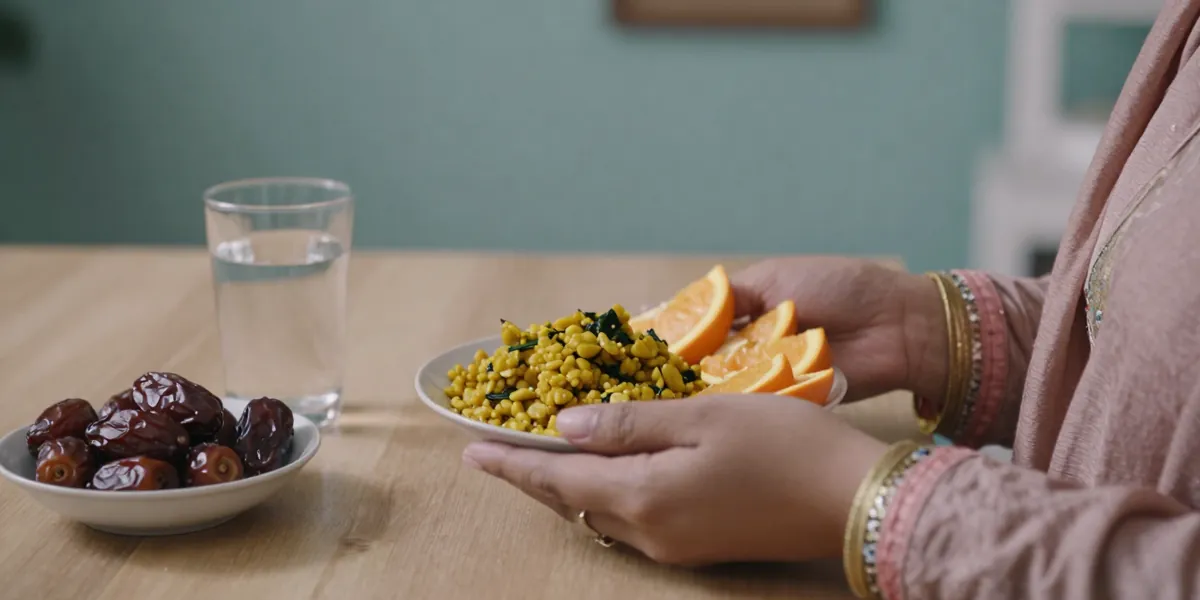
Daal, chana, palak, red meat, fish and dried fruit like dates all help, say the NHS and NHS trusts. Eat them with a vitamin C food, such as orange or tomato.
| Food | Desi examples | What the sources say |
|---|---|---|
| Pulses and beans | Daal, chana, lobia, rajma | The NHS lists pulses as iron-rich food. An NHS trust names lentils. |
| Dark green leaves | Palak | The NHS lists dark green leafy vegetables. An NHS trust names spinach. |
| Red meat | Beef, mutton (gosht) | The NHS and an NHS trust both list red meat. |
| Fish | Machli | An NHS trust lists fish. |
| Dried fruit | Khajoor (dates), raisins | The NHS lists dried fruit. |
| Vitamin C foods to eat with them | Orange, mango, tomato, kiwi, strawberries | An NHS trust says vitamin C helps you take in iron from food. The NHS says orange juice after a tablet may help. |
| Kaleji (liver) | Not advised in pregnancy | The NHS lists liver under foods to avoid. It has a lot of vitamin A, which can harm your baby. |
| Gur (jaggery) | Not listed | We found no health-site source that names gur as an iron food, so we haven't listed it. |
What about chai? The NHS says large amounts of tea and coffee make it harder for your body to take in iron. NHS trusts say to avoid them at mealtimes and around iron tablets.
Milk and dairy foods can also lower how much iron you absorb, says an NHS trust. Ask your doctor how long to wait after a tablet.
This is general guidance, not a meal plan. For a day-by-day menu, see a full pregnancy meal plan.
When are iron tablets or an iron drip needed?
Doctors usually start with iron tablets. An iron drip, also called intravenous (IV) iron, puts iron straight into a vein. It's for when tablets haven't worked. Your doctor decides which one you need.
An NHS trust says a drip is also used when side effects stop you taking tablets. It's used too when there isn't enough time before the baby is due.
The NHS says doctors usually prescribe iron tablets when the red blood cell count is low. It says tablets are usually taken for about 6 months, with repeat blood tests to check progress.
The NHS lists these side effects of iron tablets.
- Constipation or diarrhoea
- Stomach pain and heartburn
- Feeling sick
- Darker poo than usual
The NHS says taking tablets with or just after a meal may reduce side effects. Don't stop on your own if they bother you. Tell your doctor, because an NHS trust says a different type of tablet may help.
Keep iron tablets away from children. The NHS says an overdose of iron can be fatal in a young child.
The dose, the type of tablet and the length of treatment are for your doctor to decide. This page gives no doses on purpose. A drip is given in person at a hospital.
Your Hb is checked at your first booking visit. That's why early antenatal checkups matter.
What tests will my doctor do for anaemia?
Your doctor checks Hb with a full blood count, a simple blood test. In pregnancy you're screened at your first booking visit and at 28 weeks. Some women are tested again at 34 to 36 weeks, and 2 to 3 weeks after starting treatment.
A ferritin test shows your iron stores. The NNS 2018 researchers counted iron deficiency anaemia as a low Hb together with a low ferritin.
Our guide to the blood tests you'll have in pregnancy covers the full list, so we won't repeat it here.
An online consult can't take your blood. You go to a lab, and the consult can go through your report.
What can an online consult do about low Hb?
An online consult can go through your history, symptoms and Hb report, give advice and plan the tests you need. It can't do a physical exam, take blood, give a drip or handle an emergency.
Dr. Ayesha Jawed, MBBS, postgraduate trainee in Obstetrics and Gynaecology (CPSP), gives online consultations for Karachi Gynae. She can go through your weeks, reports and scan results with you.
She reviews your reports, and you can share clear photos of them on WhatsApp. She can send a prescription when it's safe to do so online.
Blood pressure checks, checks on your baby's heartbeat and growth, and scans need a visit to a hospital or lab. She doesn't deliver babies.
A consult costs Rs 499 for up to 1 hour. You can choose video, a call or WhatsApp on +92 334 2382368, Monday to Saturday, 9 am to 9 pm. You can book an online consult to talk it through.
Hamal mein khoon ki kami (low Hb) kya hoti hai? (Roman Urdu mein)
Hamal mein khoon ki kami ka matlab hai ke aap ke khoon mein haemoglobin (Hb) kam hai. WHO ke mutabiq pehle aur teesre trimester mein Hb 11.0 g/dL se neeche ho to anaemia hai. Doosre trimester mein yeh hadd 10.5 g/dL hai.
- Pakistan mein yeh aam hai. NNS 2018 mein 15 se 49 saal ki taqreeban 41.7% khawateen mein khoon ki kami thi.
- Daal, chana, palak, gosht, machli aur khajoor mein iron hota hai. Saath mein narangi, aam ya tamatar khayein.
- Chai khane ke saath ya iron ki goli ke saath na piyein.
- Kaleji hamal mein na khayein. NHS ke mutabiq us mein vitamin A bohat hota hai jo bachay ke liye nuqsandeh ho sakta hai.
- Iron ki goli ya drip ka faisla doctor karta hai. Khud se goli ya dose shuru na karein.
- Chakkar kha kar girne, seene mein dard ya saans bohat phoolne par foran qareebi hospital emergency jayein ya Edhi 115 par call karein.
Questions women ask
What should my Hb be in pregnancy?
According to WHO, anaemia starts when Hb is below 11.0 g/dL in the first and third trimesters. In the second trimester the cut-off is 10.5 g/dL. Ask your doctor which cut-off your lab report uses.
How can I raise Hb quickly in pregnancy?
None of the sources we read promise a quick fix. Doctors usually start with iron tablets and repeat the blood test 2 to 3 weeks later to see if they're working. Eat iron-rich food too, but let your doctor decide on tablets or a drip.
Is low Hb dangerous for my baby?
WHO and an NHS trust link anaemia in pregnancy with a premature birth and a baby with low birth weight. That's a link seen in studies, not a sure result. Treating low iron is how doctors deal with it.
Can I take iron tablets and drink chai?
The NHS says large amounts of tea and coffee make it harder to take in iron. NHS trusts say to avoid them at mealtimes and around iron tablets. Ask your doctor how long to wait after a tablet.
When do I need an iron drip?
An NHS trust says a drip is used when tablets haven't worked or when side effects make you stop them. It's also used when time before the baby is due is short. Your doctor decides, and it's given in a hospital.
Does anaemia cause bleeding or swelling in pregnancy?
The NHS pages we read don't list bleeding or swelling as signs of anaemia. Bleeding in pregnancy always needs a doctor, so don't put it down to low Hb. Go to the nearest hospital emergency if it's heavy or comes with pain.
Iron ki goliyon se qabz ya ulti ho to kya karein?
Qabz, dast, pet dard, ji michlana aur kaala paakhana iron ki goliyon ke aam asraat hain. NHS ke mutabiq goli khane ke saath ya baad mein lene se asar kam ho sakta hai. Goli khud band na karein, doctor ko batayein.
Hamal mein Hb kitna hona chahiye?
WHO ke mutabiq pehle aur teesre trimester mein Hb 11.0 g/dL se neeche ho to anaemia hai. Doosre trimester mein yeh hadd 10.5 g/dL hai. Aap ki lab report mein hadd alag ho sakti hai, isliye doctor se poochein.
Khoon ki kami door karne ke liye kya khayein?
Daal, chana, palak, gosht, machli aur khajoor khayein, saath mein narangi, aam ya tamatar. Chai khane aur goli ke saath na piyein. Goli ya drip ka faisla doctor karta hai.