 Service
Irregular periods: what counts as irregular, causes at each age, tests and treatment options.

Emergency warning
Severe tummy pain or very heavy bleeding? Go to the nearest hospital emergency now, or call Edhi on 115. Don't wait for an online reply.
Told you have a fibroid? Here's what it is, what your scan report means, and your treatment choices.
Book an online consult
Rs 499, up to 1 hour with Dr. Ayesha. Two quick steps.
Quick answer
Fibroids are common growths in or around the womb, and they aren't cancer. Many cause no symptoms and need no treatment. When they do cause problems, the usual signs are heavy or painful periods, pressure and peeing often. An ultrasound shows their size and place, and treatment depends on your symptoms and plans for children.
A fibroid is an emergency if you get severe pain or very heavy bleeding. MedlinePlus says these can need emergency surgery. Go to the nearest hospital emergency now, or call Edhi on 115.
Bleeding that soaks a pad soon after you put it on, or feeling faint or dizzy, counts too.
The American College of Obstetricians and Gynecologists (ACOG) says a fibroid on a stalk can twist and cause pain, sickness or fever.
Don't wait for an online reply. An online consult can't examine you or stop bleeding.
Fibroids are common growths in or around the womb, and they're not cancer, says the National Health Service (NHS) in the UK. They mainly affect women who haven't reached menopause.
Doctors also call them uterine fibroids, leiomyomas or myomas. In Urdu, many say bachedani ki rasauli.
MedlinePlus says fibroids are typically not cancer and don't become cancer. ACOG says they're rarely linked with cancer.
ACOG says fast growth, or doubt about whether a lump is a fibroid or an ovarian tumour, are reasons for treatment. So any new or fast-growing lump needs a doctor's check.
Many fibroids cause no symptoms at all, says the NHS. When they do, the usual signs are heavy or painful periods, tummy or lower back pain, peeing often, and constipation or bloating.
The NHS also lists these:
ACOG adds bleeding between periods, a feeling of pressure, and a bigger womb and tummy.
For heavy bleeding, our page on heavy periods shows how much is too much, and how it links to anaemia.
Nobody knows the exact cause of fibroids, says the NHS. ACOG says the hormones oestrogen and progesterone seem to help them grow. Fibroids may also run in families.
The NHS says you're more likely to get fibroids if you:
A risk factor doesn't mean you'll get fibroids. It means a scan is worth asking about if you have symptoms.
ACOG says hormone medicines with oestrogen, such as the birth control pill, may make fibroids grow. Tell your doctor about any pills you take.
Fibroids are usually found with an ultrasound scan, says the NHS. The scan shows how many fibroids there are, where they sit and how big they are. Some are found by chance on a pregnancy scan.
Before the scan, a doctor may ask about your symptoms and examine your tummy. The NHS says this may include an internal exam. That's always done in person, never online.
ACOG says other tests sometimes help:
Look for three things: the number of fibroids, their size and their place. MedlinePlus names the places. A submucosal fibroid is just under the womb lining. An intramural (myometrial) one is in the muscle wall. A subserosal one is on the outside. A pedunculated one hangs on a stalk.
ACOG says the right treatment depends on where fibroids are and how big they are.
One Karachi hospital studied 171 women aged 18 to 45 who had abnormal bleeding for over 6 months. Fibroids were the most common cause, found in 56.7% of them.
Their bleeding had lasted about 15 months on average. It's one hospital, so it doesn't show how common fibroids are across Pakistan.
These four can cause similar problems, but they're different conditions in different places. A fibroid grows in or on the womb. An ovarian cyst sits on an ovary. Only a scan or other test can tell them apart.
| Condition | What it is | Where it is | How it's usually found |
|---|---|---|---|
| Fibroid | A growth that isn't cancer (NHS) | In or around the womb | Ultrasound scan (NHS) |
| Ovarian cyst | A fluid-filled sac. Most go away in a few months without treatment (NHS) | On an ovary | Ultrasound scan (NHS) |
| Polyp | An abnormal tissue growth (ACOG) | Inside the womb | Found in 28.1% of the women with abnormal bleeding in the Karachi hospital study |
| Endometriosis | Cells like the womb lining growing outside the womb (NHS) | Around the womb, ovaries, tubes or pelvis | A laparoscopy (a camera through a small cut) can confirm it (NHS) |
If your report names one, read about ovarian cysts or endometriosis.
Fibroids that cause no symptoms often need no treatment, says the NHS. When they cause pain or heavy bleeding, medicine is usually tried first. Surgery is an option if medicine doesn't help.
No. ACOG says small fibroids, fibroids with no symptoms, and fibroids in women close to menopause often don't need treatment. MedlinePlus says follow-up scans can check if they grow.
The NHS and ACOG list these types of medicine:
ACOG says medicines may ease bleeding and pain, but they may not stop fibroids growing. A doctor chooses the medicine and dose for you, so we don't give doses here. Please don't start tablets or herbal mixes on your own.
These are done in a hospital by a specialist team. Dr. Ayesha doesn't do surgery or procedures. The NHS, ACOG and MedlinePlus describe them:
The NHS says the right choice depends on the size, number and place of your fibroids. It also says some treatments can stop you having children.
It's your body and your decision. You can take time to understand your options before any operation.
Fibroids can make it harder to get pregnant, but the NHS says this is rare. Miscarriage from fibroids is rare too. Some fibroid treatments, though, can affect future pregnancies.
ACOG says other causes of infertility are more common, so they should be checked first. When fibroids are the cause, ACOG says many women get pregnant after treatment. Our infertility treatment page covers the full set of checks.
Yes, they can. MedlinePlus says fibroids may grow in pregnancy because of more blood flow and higher oestrogen. They usually go back to their old size after the baby is born.
MedlinePlus says there's a small risk of problems:
Tell your doctor about your fibroids early in pregnancy, so they're watched on your scans. Our antenatal care page explains the regular checks.
Fibroids often shrink after menopause, say ACOG and MedlinePlus. That's because the body makes less oestrogen. MedlinePlus says they often stop causing symptoms after menopause, too.
Any bleeding after your periods have stopped for good needs a doctor's check. Read our guide on bleeding after menopause.
See a doctor if you have fibroid symptoms, if they affect your daily life, work or relationships, or if painkillers aren't helping. That's the NHS advice for this condition.
MedlinePlus also says to contact a doctor for:
Feeling tired or short of breath with heavy periods can mean anaemia, says the NHS. Ask for a blood test called a CBC.
Not sure if your symptoms need a scan? Message Dr. Ayesha on WhatsApp at +92 334 2382368.
An online consult can go through your symptoms and any reports you share, and help you plan next steps. It can't do a scan, an exam, surgery or emergency care.
Dr. Ayesha Jawed, MBBS, postgraduate trainee in Obstetrics and Gynaecology (CPSP), gives online consultations by video, call or WhatsApp.
She reviews your reports, and you can share clear photos of them on WhatsApp. She can send a prescription when it's safe to do so online.
| Online with Dr. Ayesha | In person at a hospital or lab |
|---|---|
| Talk through your periods, pain and pressure symptoms | Ultrasound scan or MRI |
| Go through the scan and CBC reports you share | Internal exam and blood tests |
| Plan which tests you need and where to go | Myomectomy, hysterectomy, UAE or other procedures |
| Advice on your next step | Fitting a hormonal IUD |
| Help you write questions for a surgeon | Severe pain or heavy bleeding (go to emergency) |
The fee is Rs 499 for up to 1 hour, Monday to Saturday, 9 am to 9 pm. See the consult fee and payment details. She can't promise a cure or a set result. Read how online consults work for the steps.
Keep your scan report, any blood test reports and a short note of your symptoms ready. You can share clear photos of them on WhatsApp. Use the list below.
To book, send a WhatsApp message or call +92 334 2382368. Pay Rs 499 by JazzCash, Easypaisa or bank transfer.
NHS ke mutabiq fibroids bachedani ke andar ya bahar aam rasauli hain, aur yeh cancer nahi hain. Aksar inki koi alamat nahi hoti, aur ilaj ki zaroorat bhi nahi hoti.
Four simple steps from your first message to your plan. It's the same for every topic.
Message on WhatsApp
Send a message to +92 334 2382368, or use the form on this page.
Pick a time
Choose a time from Monday to Saturday, 9 am to 9 pm.
Talk by video, phone or WhatsApp
Talk to Dr. Ayesha for up to 1 hour, in the way that suits you.
Get your plan
Leave with clear next steps, and a prescription when it's safe.
She reviews reports you share.
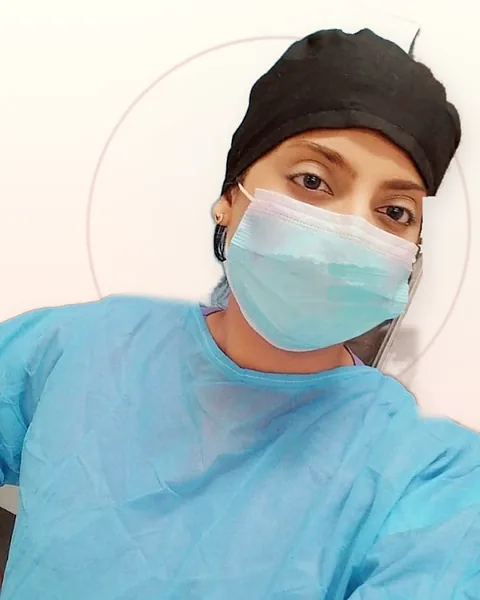
Dr. Ayesha Jawed, MBBS, training in Obstetrics and Gynaecology (CPSP)
PMDC 113388-P. PMDC lists her as Ayesha Javaid. How to check a doctor's registration.
Something else on your mind? WhatsApp +92 334 2382368, Monday to Saturday, 9 am to 9 pm.
Sometimes. MedlinePlus says fibroids often shrink after menopause, and a study showed some small fibroids shrink before menopause too. Fibroids with no symptoms may just be watched with follow-up scans.
Often, yes. The NHS says fibroids rarely stop a woman having children. ACOG says other causes of infertility are more common, and many women get pregnant after fibroid treatment.
Large fibroids can make the tummy bigger. ACOG lists an enlarged womb and tummy as a symptom, and says a large fibroid may cause swelling of the tummy.
Fibroids bachedani ki aam rasauli hain. NHS ke mutabiq yeh cancer nahi hain. Aksar koi alamat nahi hoti. Agar rasauli tezi se bare to doctor ko zaroor dikhayen.
Nahi, har dafa nahi. NHS kehta hai agar alamat na hon to ilaj ki zaroorat nahi. Dard ya heavy bleeding ho to pehle dawa try hoti hai. Operation sirf hospital mein specialist karte hain.
Haan, aksar ho sakti hai. NHS ke mutabiq fibroids ki wajah se bachay na hona ya miscarriage kam hota hai. Pregnancy mein doctor ko shuru mein hi fibroids ka bata dein.
ServiceIrregular periods: what counts as irregular, causes at each age, tests and treatment options.
 Guide
How heavy is too heavy? Signs of heavy periods, causes like fibroids, the anaemia link, treatments and when to see a doctor.
 Service
PCOS treatment in Karachi: how periods, skin, weight and fertility are managed, which medicines doctors may use, and an online consult with Dr. Ayesha.
Awaiting medical review by Dr. Ayesha Jawed. Written from the sources listed here. General information, not a diagnosis.
Last updated 19 November 2026
Dr. Ayesha JawedMBBS, training in Obstetrics and Gynaecology (CPSP)
Online consult, Rs 499, up to 1 hour. Private, from home, anywhere in Pakistan. Fill in two short steps and WhatsApp opens with your details ready.
Book your consult
Rs 499, up to 1 hour with Dr. Ayesha. Two quick steps.
In an emergency, go to the nearest hospital or call Edhi 115.
This page is coming soon.