 Service
Antenatal care in Karachi: the WHO 8-visit schedule, tests and scans, danger signs, and an online consult with a lady doctor between your hospital visits.

Online consult across Pakistan
Why a C section is advised, what happens on the day, and the real risks.
Book an online consult
Rs 499, up to 1 hour with Dr. Ayesha. Two quick steps.
Time with a female doctor
Up to 1 hour with Dr. Ayesha, by video, phone or WhatsApp.
Your reports reviewed
Share past tests, scans or prescriptions, and she'll go through them with you.
A clear plan
What to do next, and which tests may help.
A prescription when it's safe
If you need to be seen in person, she'll tell you plainly.
Quick answer
A C section delivery is an operation that delivers your baby through a cut in your tummy and womb. It's planned ahead when a vaginal birth looks risky, or done as an emergency in labour. Dr. Ayesha Jawed doesn't operate, but she can talk through your options in an online consult before you decide.
A C section delivery is an operation that delivers your baby through a cut made in your tummy and womb. The National Health Service (NHS) in the UK says it can be planned ahead or done in an emergency.
Its full name is caesarean section, and doctors may write it as CS or LSCS. In Roman Urdu, it's operation se delivery, or operation wali delivery.
Needing a C section is nothing to be ashamed of, and neither is a normal birth. The right one depends on you and your baby. More guides sit under our online women's health services.
A C section is needed when a vaginal birth looks unsafe for you or your baby. The NHS says it may be planned (elective) before labour, or done as an emergency once labour has started.
The NHS lists these medical reasons:
| Planned (elective) | Emergency | |
|---|---|---|
| When it's decided | Before labour, often weeks ahead | During labour, or when a problem appears suddenly |
| Usual timing | From the 39th week of pregnancy (NHS) | Whenever it's needed |
Families often join the talk, but the final choice is made by you and your hospital doctor.
Told you may need a C section? Message Dr. Ayesha on WhatsApp to talk it through before you decide.
Yes, you can ask, and the NHS says some women choose a C section for non-medical reasons. Your doctor should first explain the benefits and risks for you and your baby, compared with a vaginal birth.
The NHS also says:
That's UK guidance, and hospitals in Pakistan set their own rules, so ask yours early.
Fear of labour pain is common. Our guide to normal delivery explains a vaginal birth, so you can weigh both choices.
A C section may be done at 37 or 38 weeks if a medical problem means waiting is riskier for you or your baby. Otherwise, the NHS says planned C sections are usually done from the 39th week of pregnancy.
Why wait until 39 weeks? The NHS says breathing difficulties are a common risk for the baby after a C section. They most often affect babies born before 39 weeks. These problems usually get better within a few days.
Reasons to go earlier come from the medical list above, such as worsening pre-eclampsia or heavy bleeding. Given a date before 39 weeks? It's fair to ask: "What's the risk if we wait?"
You're given an anaesthetic, then a 10 to 20 cm cut is made across your lower tummy and womb to lift your baby out. The NHS says the whole operation normally takes about 40 to 50 minutes.
The NHS says most women have a spinal or epidural anaesthetic. It's an injection in the back that numbs the lower half of your body, so you stay awake but don't feel pain.
A general anaesthetic, where you're fully asleep, is used in some cases. The NHS says this happens if you can't have a spinal or epidural, or the baby must be delivered more quickly. Your anaesthetist decides with you which one is safest.
The NHS says a birth partner can usually stay if you're awake, but not with a general anaesthetic. Hospital rules differ, so ask yours.
Heard of a "laser C section"? It isn't in the NHS guidance on how a caesarean is done, so ask your surgeon what they mean.
Packing for a planned date? Our hospital bag checklist for delivery covers what to take.
Most women can go home 1 or 2 days after a C section, the NHS says, but full recovery takes several weeks. It usually takes longer than recovering from a vaginal birth.
Stitches, bleeding, diet and walking are covered week by week in our c section recovery guide. Our page on postnatal care covers your check-ups after birth. If you're thinking about the next baby, read about family planning after delivery.
The NHS says a C section is generally a very safe operation, but like any surgery it carries some risk. Infections are common, while heavy bleeding is uncommon, and clots and bladder damage are rare.
| Who | Risk | How often (NHS) |
|---|---|---|
| Mother | Infection of the wound or the womb lining | Common, but less so now that antibiotics are given before the operation |
| Mother | Heavy bleeding, which may need a blood transfusion or another operation | Uncommon |
| Mother | A blood clot in the leg (deep vein thrombosis), which can travel to the lungs | Rare |
| Mother | Damage to the bladder or the tubes from the kidneys | Rare |
| Baby | A small cut on the skin, which usually heals well | Common |
| Baby | Breathing difficulties, mostly before 39 weeks | Common |
The NHS doesn't give exact numbers for these, so we haven't added any.
Most women have no problems in later pregnancies, the NHS says. Less often, the scar in the womb can open up, or the placenta can attach too deeply to the womb wall. The Royal College of Obstetricians and Gynaecologists (RCOG) says all serious risks increase with every caesarean you have.
Many women can still try a vaginal birth next time. Our normal delivery guide has the RCOG numbers and says when it isn't advised.
The NHS says to contact a doctor straight away after a C section if you have any of these:
With heavy bleeding, breathlessness or severe pain, go to the nearest hospital emergency now, or call Edhi on 115. Don't wait for an online reply.
C sections in Pakistan have risen fast, from 14% of births in 2012-13 to 22% in 2017-18, the PDHS reports. The survey doesn't record why each operation was done, so it can't say how many were medically needed.
Here's what the PDHS 2017-18 found for births in the 5 years before the survey:
| Group | Births by C section |
|---|---|
| All of Pakistan | 22% |
| Private hospitals and clinics | 38% |
| Public hospitals | 25% |
| Urban areas | 32% |
| Rural areas | 18% |
| Sindh, all areas | 22.9% |
| Sindh, urban areas | 34.1% |
A 2020 study in BMC Pregnancy and Childbirth used four rounds of the survey. It found C sections among mothers rose from 3.2% in 1990-91 to 19.6% in 2017-18, with private hospitals linked to a higher chance. It counts mothers, not births, so its figure is lower than the PDHS 22% of births.
The World Health Organization (WHO) says that as C section rates rise towards 10% of births in a population, deaths of mothers and newborns fall. Above 10%, there's no evidence that death rates improve.
The WHO also says a C section can save lives when it's medically needed. So a high national rate doesn't make your own C section wrong, but it's worth asking why it's advised.
No, Dr. Ayesha Jawed, MBBS, postgraduate trainee in Obstetrics and Gynaecology (CPSP), gives online consultations only and doesn't operate or deliver babies. Your C section is done by the surgical team at your hospital.
She can help you prepare. In an online consult (Rs 499, up to 1 hour), she talks it through and helps you plan questions.
She reviews your reports, and you can share clear photos of them on WhatsApp. She can send a prescription when it's safe to do so online.
| Online with Dr. Ayesha | In person at your hospital |
|---|---|
| Explain why a C section was advised, in plain words | Examining you and deciding on the operation |
| Review your scans, blood tests and ultrasound reports | Scans, blood tests and monitoring |
| Help you list questions for your surgeon and anaesthetist | The C section and the anaesthetic |
| Follow-up after the birth, with a prescription when it's safe to do so online | Emergencies: heavy bleeding, severe pain, breathlessness |
The cost depends on the hospital, the room and your stay, so we don't quote one price. Our guide to delivery charges in Karachi lists dated news reports on C section prices.
WhatsApp Dr. Ayesha on +92 334 2382368, pick a time Monday to Saturday, 9 am to 9 pm, and talk online for Rs 499. The consult lasts up to 1 hour, by video, call or WhatsApp.
She can't examine you online, and if you need an exam, she'll tell you where to go. See our antenatal care page, how an online consultation works, or book an appointment.
Four simple steps from your first message to your plan. It's the same for every topic.
Message on WhatsApp
Send a message to +92 334 2382368, or use the form on this page.
Pick a time
Choose a time from Monday to Saturday, 9 am to 9 pm.
Talk by video, phone or WhatsApp
Talk to Dr. Ayesha for up to 1 hour, in the way that suits you.
Get your plan
Leave with clear next steps, and a prescription when it's safe.
She reviews reports you share.
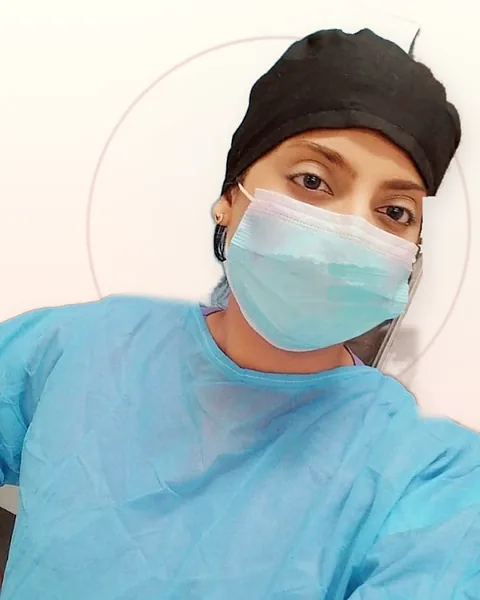
Dr. Ayesha Jawed, MBBS, training in Obstetrics and Gynaecology (CPSP)
PMDC 113388-P. PMDC lists her as Ayesha Javaid. How to check a doctor's registration.
Rs 499per consult, up to 1 hour
Pay by JazzCash, Easypaisa or bank transfer. See fees and payment.
Something else on your mind? WhatsApp +92 334 2382368, Monday to Saturday, 9 am to 9 pm.
Yes, you can. The NHS says hospital staff can help you start breastfeeding after a caesarean if you want to. With a spinal or epidural, you're awake and can hold your baby straight away.
Neither is better for everyone. The NHS says C section recovery usually takes longer, but the WHO says a C section can save lives when it's medically needed.
C section ka matlab hai operation se delivery. Pet aur bachchedani mein cut laga kar bachche ko bahar nikala jata hai. Yeh pehle se plan ho sakta hai, ya labour ke dauran emergency mein hota hai.
Jab normal delivery maa ya bachche ke liye mehfooz na ho. Jaise bachcha ulta ho, placenta neeche ho, BP bahut barh jaye, labour aage na barhe ya bachche ko oxygen kam mile. Faisla hospital ka doctor aap ke saath karta hai.
Aksar ho sakti hai, lekin doctor pehle scar aur aap ki halat dekhti hain. RCOG teen ya zyada C sections ke baad iski salah nahi deta. Tafseel hamari normal delivery guide mein hai.
NHS ke mutabiq aksar auratein 1 ya 2 din mein ghar chali jati hain. Pakistan mein PDHS 2017-18 ke mutabiq hospital mein C section karwane wali 74% auratein 3 din ya us se zyada rahin.
ServiceAntenatal care in Karachi: the WHO 8-visit schedule, tests and scans, danger signs, and an online consult with a lady doctor between your hospital visits.
 Service
Normal delivery explained: who can try it, the stages of labour, pain relief, tears and when a C-section is needed.
 Service
Postnatal care in Karachi: how long bleeding lasts after delivery, warning signs, the 6-week check-up, and an online consult with a lady doctor for Rs 499.
 Delivery and after
Heavy bleeding, fever, a swollen or pus-filled wound, a painful swollen leg or breathlessness: go to a hospital now. Here's what to expect, week by week, and how to look after yourself.
Awaiting medical review by Dr. Ayesha Jawed. Written from the sources listed here. General information, not a diagnosis.
Last updated 19 November 2026
Dr. Ayesha JawedMBBS, training in Obstetrics and Gynaecology (CPSP)
Online consult, Rs 499, up to 1 hour. Private, from home, anywhere in Pakistan. Fill in two short steps and WhatsApp opens with your details ready.
Book your consult
Rs 499, up to 1 hour with Dr. Ayesha. Two quick steps.
In an emergency, go to the nearest hospital or call Edhi 115.
This page is coming soon.