 Service
Antenatal care in Karachi: the WHO 8-visit schedule, tests and scans, danger signs, and an online consult with a lady doctor between your hospital visits.

Online consult across Pakistan
What's normal in the 6 weeks after birth, which signs mean hospital now, and when your check-ups are due.
Book an online consult
Rs 499, up to 1 hour with Dr. Ayesha. Two quick steps.
Time with a female doctor
Up to 1 hour with Dr. Ayesha, by video, phone or WhatsApp.
Your reports reviewed
Share past tests, scans or prescriptions, and she'll go through them with you.
A clear plan
What to do next, and which tests may help.
A prescription when it's safe
If you need to be seen in person, she'll tell you plainly.
Quick answer
Postnatal care is the care you and your baby get in the first 6 weeks after birth. The World Health Organization recommends check-ups at 2 to 3 days, 1 to 2 weeks and 6 weeks. Heavy bleeding, fever, calf pain, breathlessness or a severe headache need a hospital now.
Postnatal care is the care you and your baby get in the first 6 weeks after birth, and postpartum simply means the time after delivery. It covers your bleeding, healing, feeding, mood and family planning.
In Roman Urdu, postpartum means delivery ke baad ka waqt, or zachgi ke baad ka daur.
These first weeks matter. The World Health Organization (WHO) says most maternal and newborn deaths happen in the first days after birth. Yet it says more than 3 in 10 women and babies don't get postnatal care in those days.
Pakistan has the same gap. A 2021 study looked at 3,887 babies in the national Pakistan Demographic and Health Survey 2017-18. About 37 in 100 babies (roughly 4 in 10) got no postnatal check in their first 2 days.
The gap was widest for babies born outside a health facility: about 3 in 4 of them got no check. The study counted checks for babies, not for mothers.
This page follows on from antenatal care. It is one of our online women's health consults.
Bleeding after delivery, called lochia, usually carries on for a few weeks. The NHS says it's heavy at first, then slowly turns brownish and gets lighter until it stops completely.
The NHS says bleeding may be redder and heavier when you breastfeed, so a short rise during a feed is common. Bleeding that gets heavier and stays heavy is different, and it's covered in the next section.
Don't use tampons or menstrual cups until after your 6-week check. The NHS says they could raise your chance of an infection while the wound inside is still healing.
Many families ask whether this bleeding counts as nifas for prayer. That's a religious question, so please ask your scholar. Our guide to chilla after delivery covers the 40 days and family customs.
Sudden or very heavy bleeding, feeling faint or a racing heartbeat, large clots, or blood that smells bad are not normal after delivery. Go to the nearest hospital emergency now, or call Edhi on 115.
Heavy bleeding after birth is called postpartum haemorrhage (PPH). The Royal College of Obstetricians and Gynaecologists (RCOG) explains two kinds:
| Type | When it happens | What it means (RCOG) |
|---|---|---|
| Primary PPH | First 24 hours after birth | Losing 500 ml (about a pint) of blood or more |
| Secondary PPH | From 24 hours to 12 weeks after birth | Abnormal or heavy bleeding, often from a womb infection or leftover placenta |
The RCOG says most women won't have a PPH. Get help if bleeding gets heavier, your lochia smells bad, or you feel unwell. The NHS says to tell a doctor about large clots, because you may need treatment.
The NHS lists these as signs to get help straight away after giving birth:
Don't wait for an online reply in an emergency. Unsure if your bleeding is normal but you feel well? Message Dr. Ayesha on WhatsApp, and she can talk it through with you and say whether you need a hospital.
Your periods come back at different times depending on how you feed your baby. The NHS says they can start 5 to 6 weeks after birth with bottle or mixed feeding, but later with full breastfeeding.
Lochia isn't a period. It's the bleeding from your body healing after the birth, and it slowly fades and stops.
You can get pregnant again before your first period. The NHS says pregnancy is possible just 3 weeks after birth, even if you're breastfeeding. It advises starting contraception within 21 days of the birth. Our guide on family planning after delivery explains which methods are safe while you breastfeed.
The postnatal check-up looks at your recovery, mood, bleeding, stitches, feeding and family planning. The WHO recommends at least 3 check-ups after the first day, and the NHS holds a final check at 6 to 8 weeks.
| When | What the WHO recommends |
|---|---|
| First 24 hours | Care in the hospital for at least 24 hours after birth. After a home birth, the first check should happen as early as possible, and no later than 24 hours. |
| 2 to 3 days (48 to 72 hours) | A check-up for you and your baby |
| 1 to 2 weeks (7 to 14 days) | A check-up for you and your baby |
| Week 6 | A check-up for you and your baby |
The NHS says the check is at 6 to 8 weeks after birth, and these are the items it covers:
If your smear test was due in pregnancy, the NHS moves it to 12 weeks after the birth.
Sore nipples, worries about milk supply, overfull breasts, blocked ducts, mastitis, thrush and tongue-tie are common breastfeeding problems. The NHS says to ask for help early, because putting up with pain can make it worse.
The NHS says to contact a doctor if breast or nipple pain doesn't go away. For mastitis, see a doctor if you're no better within 12 to 24 hours or you feel worse. If your baby is feeding poorly, talk to your baby's doctor soon.
Online, Dr. Ayesha can go through your feeding and positions in words and plan the next step. She can't examine your breast or your baby's mouth online. Before Ramadan, read fasting while breastfeeding.
Yes, heavy hair shedding a few months after delivery is normal and temporary. The American Academy of Dermatology (AAD) says it usually peaks about 4 months after birth. Most women's hair is back to normal by their child's first birthday.
The AAD says this is extra shedding, not true hair loss. If your hair isn't back to normal after one year, the AAD says you may want to see a skin doctor (a dermatologist). Something else may be the cause.
In the first six weeks, bleeding slowly stops, stitches and soreness heal, your bladder and tummy muscles recover, and you settle into feeding your baby.
Start with pelvic floor exercises. The NHS says to squeeze and draw in as if holding in wind, hold for up to 10 seconds, then relax. Build up to 10 repeats, at least 3 times a day.
The NHS says to avoid sit-ups, planks and high-impact exercise at first. Leaking a little urine when you cough or laugh is common, so raise it at your check-up if the exercises don't help. Ask then when other exercise is safe.
The WHO says a new baby can bring unusual stress and anxiety, and it recommends screening women for depression and anxiety after birth. If low mood or worry keeps going, read our guide to postpartum depression and tell a doctor. Family help during the chilla is a real support, but tell a doctor if your bleeding changes, even if elders say it's normal.
Had a caesarean? The wound, bleeding and timeline are different, so see our guide to recovery after a C-section.
An online consult lets you talk through bleeding, healing, feeding, mood and family planning with a lady doctor from home, with no travel. Exams, stitch checks and emergencies need a hospital.
| Online with Dr. Ayesha | In person at a hospital |
|---|---|
| Go through your bleeding, pain and how you're healing | Checking stitches or a C-section wound |
| Review your discharge papers, Hb and other reports | Blood pressure checks, blood tests and scans |
| Talk through feeding problems and plan the next step | Examining the breast or the baby |
| Talk about mood, sleep and worries | Heavy bleeding, fever, leg pain, breathlessness or a bad headache |
| Plan family planning and send a prescription when it's safe to do so online | Fitting an IUD or an implant |
Dr. Ayesha Jawed is an MBBS doctor and a postgraduate trainee in Obstetrics and Gynaecology (CPSP). She doesn't deliver babies or do C-sections. If you need an exam, she'll tell you where to go.
She reviews your reports, and you can share clear photos of them on WhatsApp. She can send a prescription when it's safe to do so online.
WhatsApp Dr. Ayesha on +92 334 2382368, pick a time Monday to Saturday, 9 am to 9 pm, and then talk online for Rs 499. The consult lasts up to 1 hour, by video, call or WhatsApp.
She works with women in Karachi and every city in Pakistan. See how an online women's health consult works, or book an appointment now.
Four simple steps from your first message to your plan. It's the same for every topic.
Message on WhatsApp
Send a message to +92 334 2382368, or use the form on this page.
Pick a time
Choose a time from Monday to Saturday, 9 am to 9 pm.
Talk by video, phone or WhatsApp
Talk to Dr. Ayesha for up to 1 hour, in the way that suits you.
Get your plan
Leave with clear next steps, and a prescription when it's safe.
She reviews reports you share.
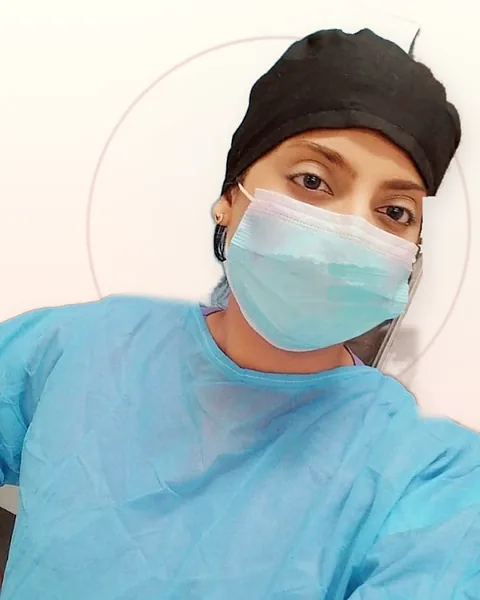
Dr. Ayesha Jawed, MBBS, training in Obstetrics and Gynaecology (CPSP)
PMDC 113388-P. PMDC lists her as Ayesha Javaid. How to check a doctor's registration.
Rs 499per consult, up to 1 hour
Pay by JazzCash, Easypaisa or bank transfer. See fees and payment.
Something else on your mind? WhatsApp +92 334 2382368, Monday to Saturday, 9 am to 9 pm.
The NHS says it carries on for a few weeks. It's heavy at first, then turns brownish and gets lighter until it stops. Tell a doctor if it gets heavier again or smells bad.
The WHO recommends check-ups at 2 to 3 days, 1 to 2 weeks and 6 weeks after birth. The NHS holds its final check at 6 to 8 weeks.
NHS ke mutabiq yeh kuch hafte chalti hai. Shuru mein zyada hoti hai, phir bhoori aur kam hoti jaati hai. Agar achanak bahut zyada ho, bade lothre aayen ya badbu ho to foran hospital jayen.
Bahut zyada bleeding, chakkar, tez bukhar, taang mein dard ya sujan, saans ki mushkil ya sakht sar dard ho to foran hospital jayen. Edhi 115 par call kar sakti hain.
Bottle ya mix feeding mein 5 se 6 hafton mein aa sakte hain. Sirf doodh pilane par der se aate hain. Periods se pehle bhi hamal ho sakta hai, is liye family planning ki baat jaldi karein.
WHO ke mutabiq 2 se 3 din, 1 se 2 hafte aur 6 hafte par checkup hona chahiye. Taankon ka muayna hospital mein hota hai. Sawalaat aur reports online Rs 499 mein dikha sakti hain.
ServiceAntenatal care in Karachi: the WHO 8-visit schedule, tests and scans, danger signs, and an online consult with a lady doctor between your hospital visits.
 Service
Normal delivery explained: who can try it, the stages of labour, pain relief, tears and when a C-section is needed.
 Service
C section delivery: why it's done, planned or emergency, anaesthesia, risks and Pakistan's rising rates.
 Delivery and after
Rest, family help and good food are a kind part of chilla. A few customs can hide danger. Here's which is which, and the check-up to keep.
 Delivery and after
Feeling low after delivery is common, and it's treatable. Here's how baby blues differ from depression, how it's screened, and what family can do.
 Delivery and after
Many mothers ask if roza is safe while nursing. Here's what studies and health sites say, the warning signs, and where the religious ruling belongs.
Awaiting medical review by Dr. Ayesha Jawed. Written from the sources listed here. General information, not a diagnosis.
Last updated 19 November 2026
Dr. Ayesha JawedMBBS, training in Obstetrics and Gynaecology (CPSP)
Online consult, Rs 499, up to 1 hour. Private, from home, anywhere in Pakistan. Fill in two short steps and WhatsApp opens with your details ready.
Book your consult
Rs 499, up to 1 hour with Dr. Ayesha. Two quick steps.
In an emergency, go to the nearest hospital or call Edhi 115.
This page is coming soon.