 Guide
White discharge (safaid pani, likoria): the reasons, what's normal before a period or in pregnancy, signs of infection, when to see a doctor.

Emergency warning
Severe or worsening pain low in your tummy, a high fever or shivers, vomiting, fainting, or pain with heavy bleeding? Go to the nearest hospital emergency now, or call Edhi on 115. Don't wait for an online reply.
Book an online consult
Rs 499, up to 1 hour with Dr. Ayesha. Two quick steps.
Quick answer
Pelvic inflammatory disease (PID) is an infection of the womb, fallopian tubes and ovaries. Bacteria move up from the vagina. They can come from sex, or from childbirth, a miscarriage or an IUD fitting. Antibiotics clear it if it's found early. Untreated, it can harm fertility.
Severe or worsening pelvic pain, a high fever, vomiting or fainting needs a hospital emergency today. So does sudden sharp pain low in your tummy, or pain with heavy bleeding.
Go to the nearest hospital emergency now, or call Edhi on 115. Don't wait for an online reply, and don't wait for the pain to pass.
The National Health Service (NHS) in the UK lists these emergency signs if you think you have PID:
Could you be pregnant? The NHS says PID symptoms in pregnancy need urgent advice.
The American College of Obstetricians and Gynecologists (ACOG) says these signs can also mean appendicitis. They can mean an ectopic pregnancy too, which grows outside the womb.
Pelvic inflammatory disease (PID) is an infection of the womb, fallopian tubes and ovaries, says the NHS. It's usually easy to treat with antibiotics if it's found early.
ACOG says bacteria move up from the vagina and the cervix (the neck of the womb) into the womb, tubes or ovaries.
PID isn't the same as a vaginal infection such as thrush. With PID, ACOG says the infection has moved up past the cervix. If your main worry is itching or an odd discharge, read our guide to treating itching and vaginal infections.
The main symptoms are pain low in your tummy or pelvis, pain deep inside during sex, and unusual periods. Bleeding between periods or after sex, and discharge that looks or smells different, are common too. The NHS says symptoms can start fast or build slowly.
ACOG and MedlinePlus add these signs:
One sign alone doesn't mean you have PID. Burning when you pee is also a common sign of a urine infection, says the NHS. Read why women get UTIs and what normal white discharge looks like. The NHS says endometriosis can cause similar symptoms too.
Yes. The NHS says not everyone with PID has symptoms. ACOG says some women have only mild signs, so many cases aren't spotted. MedlinePlus says chlamydia can cause PID with no symptoms at all.
No, PID isn't always from sex. The NHS says it's usually caused by infections passed on during sex, such as chlamydia and gonorrhoea. But common bacteria that live in the vagina can cause it too.
ACOG names bacterial vaginosis (BV) as one cause that isn't sexually transmitted. MedlinePlus says bacteria from the cervix can move up into the womb during a medical event or procedure, such as:
The NHS adds a hysteroscopy (a camera check inside the womb) and any other procedure that opens the cervix. After a coil fitting, read what's normal in our copper T guide.
One public hospital in Rawalpindi studied 762 women with PID symptoms, from 2022 to 2023. All of them were married, and 97.1% had given birth before. So it can't tell us about other women.
Only 16 women, about 2.1%, tested positive for chlamydia on a urine test. The study tested for chlamydia only. It was published in the Journal of the Pakistan Medical Association in 2025.
It's one hospital, so it can't speak for all of Pakistan. A PID diagnosis isn't a verdict on anyone's character.
ACOG, the NHS and MedlinePlus list these risks:
PID is diagnosed with questions, a tummy and pelvic exam, and swabs from the cervix and vagina. A doctor may add a blood test, a pregnancy test or an ultrasound scan, says the NHS.
The doctor will ask about your symptoms, contraception and recent partners, and whether you could be pregnant. MedlinePlus says a scan helps rule out other problems, such as appendicitis.
The exam and the swabs have to be done in person, at a hospital or clinic.
The NHS says you can ask for a female doctor, and for someone else in the room during the exam. It's fair to ask for the same in Karachi. You're in control of the exam, and you can ask the doctor to stop at any time.
PID is treated with antibiotics, and ACOG says antibiotics on their own usually get rid of the infection. MedlinePlus says treatment often starts before test results come back.
A doctor chooses the antibiotics, so we don't name medicines or doses here. They may be tablets, a shot or a drip.
Please don't take leftover or chemist-bought antibiotics on your own. The World Health Organization (WHO) says drug resistance in gonorrhoea is a major threat worldwide.
ACOG says a hospital stay may be needed if you're pregnant, seriously ill, vomiting or have a high fever. An abscess in a tube or ovary, or an unclear diagnosis, can also mean hospital care. Some abscesses need surgery.
The NHS says to get urgent advice if you don't feel better after 3 days of antibiotics.
PID can be cured with treatment, but don't wait for it to go away on its own. ACOG says the longer it's untreated, the higher the risk of lasting harm, such as infertility.
PID can also come back. The NHS says you can keep getting it, and ACOG lists past PID as a risk. MedlinePlus advises a follow-up after the antibiotics, to make sure the bacteria are gone.
Yes, PID can affect fertility if it isn't treated early. ACOG, a US body, says 1 in 10 women with PID becomes infertile, because scarring can block the fallopian tubes.
The NHS lists these problems after untreated PID:
MedlinePlus says some women with tube scarring may need surgery or IVF to conceive.
At one ultrasound centre in Lahore, a 2024 study of 690 women linked past PID with trouble getting pregnant again. Our guide to not conceiving after a first baby explains this kind of infertility. If you're trying, see how a couple's fertility care plan works.
You can lower the risk by getting any infection treated early, not douching, and using condoms when an infection is possible. These steps come from ACOG and MedlinePlus.
An online consult can go through your symptoms and any reports you share, explain what they mean and help you plan your next tests. It can't do the pelvic exam, take a swab, give a drip or treat an emergency.
Dr. Ayesha Jawed, MBBS, postgraduate trainee in Obstetrics and Gynaecology (CPSP), gives online consultations by video, call or WhatsApp.
She reviews your reports, and you can share clear photos of them on WhatsApp. She can send a prescription when it's safe to do so online.
| Online with Dr. Ayesha | In person at a hospital or lab |
|---|---|
| Talk through your pain, discharge and periods | The tummy and pelvic exam |
| Go through reports you share | Swabs from the cervix and vagina |
| Plan which tests to get and where | Blood tests and an ultrasound scan |
| Advice on your next step | Injections or a drip |
| Questions for your hospital doctor | Severe pain, fever or vomiting: hospital emergency now |
It costs Rs 499 for up to 1 hour, Monday to Saturday, 9 am to 9 pm. See what the fee covers. She can't promise a cure or a set result.
Read how online consults work for the full steps.
Send a WhatsApp message or call +92 334 2382368, Monday to Saturday, 9 am to 9 pm. Choose video, call or WhatsApp, and pay Rs 499 by JazzCash, Easypaisa or bank transfer.
It'll help to have these ready:
Questions you might ask:
This is an online consult, not an emergency service.
NHS ke mutabiq PID bachadani, tubes aur ovaries ka infection hai. Jaldi pata chal jaye to antibiotics se aam taur par theek ho jata hai.
Four simple steps from your first message to your plan. It's the same for every topic.
Message on WhatsApp
Send a message to +92 334 2382368, or use the form on this page.
Pick a time
Choose a time from Monday to Saturday, 9 am to 9 pm.
Talk by video, phone or WhatsApp
Talk to Dr. Ayesha for up to 1 hour, in the way that suits you.
Get your plan
Leave with clear next steps, and a prescription when it's safe.
She reviews reports you share.
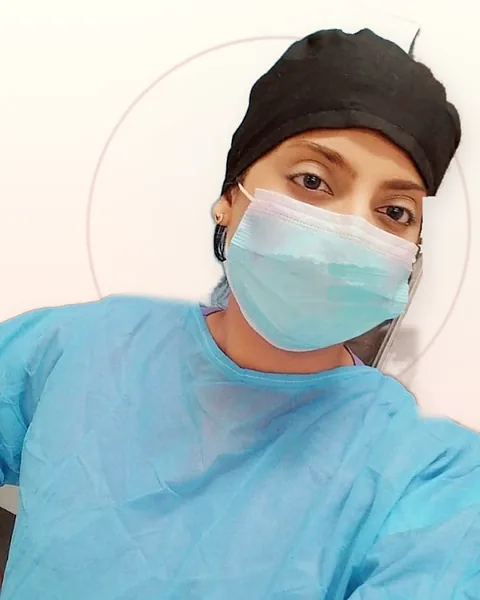
Dr. Ayesha Jawed, MBBS, training in Obstetrics and Gynaecology (CPSP)
PMDC 113388-P. PMDC lists her as Ayesha Javaid. How to check a doctor's registration.
Something else on your mind? WhatsApp +92 334 2382368, Monday to Saturday, 9 am to 9 pm.
Not always. The NHS says PID is usually caused by infections passed on during sex, but common vaginal bacteria can cause it too. MedlinePlus says it can follow childbirth, a miscarriage or an IUD fitting. A swab test shows the cause.
Don't count on it. ACOG says the longer PID goes untreated, the higher the risk of infertility, and pain can fade before the infection is cured. See a doctor, take the full course and go for a follow-up.
Most can. ACOG, a US body, says about 1 in 10 women with PID becomes infertile, mostly from scarred tubes. Early treatment lowers the risk. If you're trying and it isn't happening, ask about fertility tests.
Often, yes. ACOG says a woman's sex partners must be treated, because they can carry an infection with no signs. MedlinePlus says an untreated partner can pass it back to you. It isn't about blame.
NHS ke mutabiq PID bachadani, tubes aur ovaries ka infection hai. Pait ke neeche dard, sex ke waqt dard, periods mein tabdeeli aur ajeeb discharge iski aam alamat hain. Kuch auraton ko koi alamat nahi hoti.
Ho sakta hai, magar zaroori nahi. Safaid pani ki kai wajah ho sakti hain. Dard ke saath bukhar ya ajeeb boo ho to doctor ko dikhayen. PID ka pata exam aur swab se chalta hai.
Ho sakta hai. ACOG ke mutabiq PID wali har 10 mein se 1 aurat ko infertility ho jati hai, kyunke tubes mein nishan par jate hain. Ectopic pregnancy ka khatra bhi barhta hai. Jaldi ilaj se yeh khatra kam hota hai.
Doctor ko dikhayen. PID ka ilaj antibiotics se hota hai jo doctor tay karta hai. Khud se ya chemist se dawa lena theek nahi. Poora course khatam karein, chahe dard pehle chala jaye.
GuideWhite discharge (safaid pani, likoria): the reasons, what's normal before a period or in pregnancy, signs of infection, when to see a doctor.
 Service
Vaginal Infection Treatment in Karachi
Vaginal infection treatment depends on the cause: thrush, BV or trichomoniasis.
 Guide
What Causes a UTI in Women? Symptoms, Testing and When to See a Doctor
What causes a UTI in women: bowel bacteria, symptoms, bladder vs kidney infection, urine culture, safe treatment and when to see a doctor.
Awaiting medical review by Dr. Ayesha Jawed. Written from the sources listed here. General information, not a diagnosis.
Last updated 19 November 2026
Dr. Ayesha JawedMBBS, training in Obstetrics and Gynaecology (CPSP)
Online consult, Rs 499, up to 1 hour. Private, from home, anywhere in Pakistan. Fill in two short steps and WhatsApp opens with your details ready.
Book your consult
Rs 499, up to 1 hour with Dr. Ayesha. Two quick steps.
In an emergency, go to the nearest hospital or call Edhi 115.
This page is coming soon.