 Guide
Cervical cancer symptoms explained: unusual bleeding, discharge changes and pelvic pain, what else they can mean, and when to see a doctor.

Online consult across Pakistan
A Pap smear is a short, private test that helps prevent cervical cancer. Here's who needs it, what happens, and how to read the result.
Book an online consult
Rs 499, up to 1 hour with Dr. Ayesha. Two quick steps.
Time with a female doctor
Up to 1 hour with Dr. Ayesha, by video, phone or WhatsApp.
Your reports reviewed
Share past tests, scans or prescriptions, and she'll go through them with you.
A clear plan
What to do next, and which tests may help.
A prescription when it's safe
If you need to be seen in person, she'll tell you plainly.
Quick answer
A Pap smear is a quick test that checks a few cells from the cervix for early changes that could lead to cervical cancer. WHO advises regular screening from age 30. It's done at a hospital or lab, and Dr. Ayesha can help you plan it online.
A Pap smear, also called a Pap test or smear test, takes a few cells from your cervix. That's the opening of the womb, at the top of the vagina. A lab checks the cells for changes that could lead to cancer.
It's mainly a test to help prevent cancer, the NHS says. Changes found early can be treated before they turn into cancer, and a cancer diagnosis needs other tests.
Most cervical cancer starts with a virus called human papillomavirus (HPV). The World Health Organization (WHO) says HPV can cause early cell changes. If those aren't treated, they cause about 95% of cervical cancers. It usually takes 15 to 20 years for abnormal cells to become cancer.
The NHS checks the sample for high risk HPV first, and looks for cell changes only if HPV is found. So your result tells you two things: is HPV there, and have your cells changed?
Pap smear ka matlab: bachcha dani ke munh (cervix) se thode se cells le kar lab mein check karna. Is se cancer se pehle wali tabdeeli waqt par pakdi ja sakti hai. Ye test zyada tar cancer se bachne ke liye hai.
Our guide to the HPV vaccine in Pakistan covers the other half of prevention.
A Pap smear finds changes in the cells of your cervix, and the same sample can be tested for high risk HPV. It isn't a check for cancer of the ovary, womb, vulva or vagina, and it can't find infections like gonorrhoea or chlamydia.
| Question | Answer | Source |
|---|---|---|
| Early cell changes in the cervix | Yes, that's its main job | MedlinePlus |
| High risk HPV | Yes, when the lab runs an HPV test on the sample | NHS |
| Some infections or inflammation | Sometimes, but it isn't the test for them | MedlinePlus |
| Gonorrhoea or chlamydia | No, these need separate tests | Cleveland Clinic |
| Cancer of the ovary, womb, vulva or vagina | No | NHS England leaflet (GOV.UK) |
| A cancer diagnosis | Not on its own. It can raise a flag, and other tests confirm | MedlinePlus |
The NHS calls it a check of the health of the cervix. So it won't answer other worries, like PCOS, fibroids or pregnancy.
No, but they use the same kind of sample. The American College of Obstetricians and Gynecologists (ACOG) explains the names. A Pap test looks for abnormal cells. An HPV test looks for the most common high risk HPV types. A co-test checks both from one sample.
WHO advises cervical screening for women from age 30, and from age 25 for women living with HIV. Other countries set different ages: the NHS in the UK invites women from 25, and ACOG in the US says to start at 21.
ACOG says the starting age doesn't depend on when married life begins. Age and health history decide it.
In Pakistan, there isn't one national rule to point to. A 2020 Karachi study said the country had no mandatory screening practice. A 2022 review asked the Ministry of Health for a standard programme.
In that Karachi study, only 8 of 388 women at a hospital outpatient department had ever had a Pap smear. So if you've never had one, you're not alone.
Then don't wait for a screening date. NHS England's leaflet says symptoms, such as unusual vaginal bleeding or pain during sex, should be checked by a doctor.
Read our guides on cervical cancer symptoms, spotting between periods and postmenopausal bleeding.
How often you need a Pap smear depends on your age, the test used and the country's guidance. WHO advises a test every 5 to 10 years from age 30. The NHS invites women every 5 years, and ACOG advises a Pap test every 3 years at 21 to 29.
| Guidance | Who | How often |
|---|---|---|
| WHO (worldwide) | Women from 30 | Every 5 to 10 years, with a high-performance test |
| WHO (worldwide) | Women living with HIV, from 25 | Every 3 to 5 years |
| NHS (UK) | Women aged 25 to 64 | Every 5 years, HPV checked first |
| ACOG (US) | Ages 21 to 29 | Pap test every 3 years |
| ACOG (US) | Ages 30 to 65 | HPV test, or Pap plus HPV co-test, every 5 years |
None of these says every year. The NHS repeats the test after 1 year only when HPV is found but the cells are normal.
Not sure when you're due? WhatsApp Dr. Ayesha on +92 334 2382368 with your age and the date of your last test.
The test itself takes less than 5 minutes, and the whole appointment about 10 minutes, the NHS says. A nurse or doctor takes a few cells from your cervix with a soft brush, and you can ask them to stop at any time.
Here are the steps the NHS describes:
It doesn't usually hurt, but some women find it uncomfortable or painful, the NHS says. You can ask for a smaller speculum, and you're in control the whole time.
Light spotting afterwards should stop within a few hours. See a doctor if it's heavy or doesn't stop.
Feeling shy is normal. If it's your first time seeing a doctor for women's health, read our guide to your first visit for women's health.
Dr. Ayesha Jawed can also talk you through these steps online before the day, so you know what to expect.
Book a day when you don't have your period, ideally about 5 days after it ends. For 2 days before, avoid vaginal creams, medicines, douching and intercourse. You can ask for a female doctor or nurse and a chaperone.
Yes. NHS England says the test is usually done by a female nurse or doctor, and you can ask for this when you book. The NHS also says you can ask for a chaperone, who can be someone you know or a trained staff member.
Yes, and the choice is hers. ACOG says HPV is the main risk but not the only one, and smoking and HIV raise the risk too. NHS England says screening is a choice you make.
A doctor can talk through her own risk privately, without judgement. Nothing she asks is shameful.
Most women get a normal result. An HPV positive result or abnormal cells doesn't mean cancer. ACOG says abnormal results are common, and changed cells often go back to normal.
This is how the NHS explains each result in the UK programme. Labs in Pakistan may use other words, so keep your report to discuss.
| Result | What it means | Usual next step |
|---|---|---|
| HPV negative | No high risk HPV, so your risk of cervical cancer is very low | Next screening in 5 years |
| HPV positive, no abnormal cells | HPV was found, but your cells look normal | Repeat in 1 year. If HPV is still there after 2 years, a colposcopy |
| HPV positive with abnormal cells | Some cells have changed and need a closer look | A colposcopy in hospital. The cells won't get worse while you wait |
| Inadequate or unclear | The lab couldn't read the sample | You may be asked to repeat it in 3 months. It doesn't mean anything is wrong |
A Pap test alone may be reported as normal, unclear or abnormal (Cleveland Clinic). Abnormal cells are called low grade or high grade. ACOG says you may only need a repeat test. A colposcopy or biopsy shows how serious a change is, and high grade changes may need treatment. WHO calls treating early changes a simple and effective way to prevent cervical cancer.
The NHS says the nurse or doctor will tell you when to expect them. Cleveland Clinic says it can take up to 3 weeks for the lab result to reach your doctor.
A Pap smear is done in person, at a hospital or lab, by a doctor or nurse. Dr. Ayesha's consults are online only, so she doesn't take samples. She can help you decide if you need one, which test to ask for, and what the report means.
The cost of the test depends on the hospital or lab, so ask before you book. WHO says some programmes let women collect their own sample for HPV testing, but that isn't a Pap smear.
She reviews your reports, and you can share clear photos of them on WhatsApp. She can send a prescription when it's safe to do so online.
Dr. Ayesha Jawed, MBBS, postgraduate trainee in Obstetrics and Gynaecology (CPSP), gives online consultations as part of our online women's health services.
A consult costs Rs 499 for up to 1 hour. Use video, a call or WhatsApp on +92 334 2382368, Monday to Saturday, 9 am to 9 pm. Pay by JazzCash, Easypaisa or bank transfer. See our consult fees, read how an online consultation works, or book an appointment. We can't promise any result.
Four simple steps from your first message to your plan. It's the same for every topic.
Message on WhatsApp
Send a message to +92 334 2382368, or use the form on this page.
Pick a time
Choose a time from Monday to Saturday, 9 am to 9 pm.
Talk by video, phone or WhatsApp
Talk to Dr. Ayesha for up to 1 hour, in the way that suits you.
Get your plan
Leave with clear next steps, and a prescription when it's safe.
She reviews reports you share.
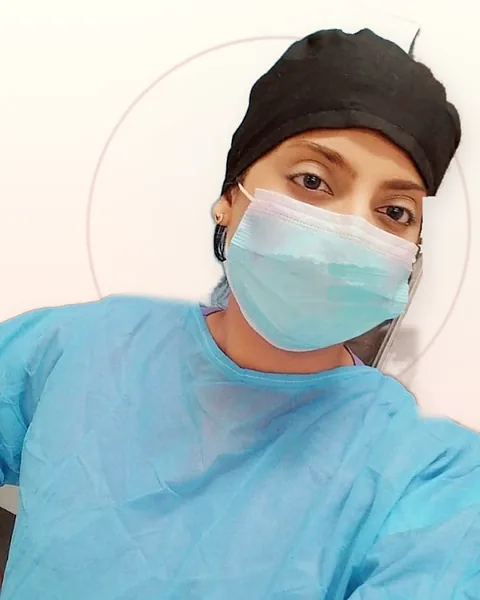
Dr. Ayesha Jawed, MBBS, training in Obstetrics and Gynaecology (CPSP)
PMDC 113388-P. PMDC lists her as Ayesha Javaid. How to check a doctor's registration.
Rs 499per consult, up to 1 hour
Pay by JazzCash, Easypaisa or bank transfer. See fees and payment.
Something else on your mind? WhatsApp +92 334 2382368, Monday to Saturday, 9 am to 9 pm.
It doesn't usually hurt, but some women find it uncomfortable or painful, the NHS says. You can ask for a smaller speculum and ask them to stop at any time. Light spotting afterwards should stop within a few hours.
Yes, and it's her choice. ACOG says HPV isn't the only risk, since smoking and HIV raise it too. A doctor can talk through her own risk privately and without judgement.
It means some cells have changed, not that you have cancer. ACOG says abnormal results are common and often go back to normal. You may need a repeat test, a colposcopy or a biopsy.
Yes. ACOG says the vaccine protects against the most common cancer-causing HPV types, but not every type. So you should still follow the screening advice for your age group.
Pap smear ek chhota sa test hai jismein doctor ya nurse bachcha dani ke munh (cervix) se thode se cells leti hain. Lab dekhti hai ke koi aisi tabdeeli to nahi jo aage chal kar cancer ban sake.
WHO 30 saal ki umar se screening ki salah deta hai, aur HIV wali khawateen ke liye 25 saal se. Doosre mulkon mein umar alag hai. Apni umar aur pichle test ki tareekh bata kar Dr. Ayesha se poochh sakti hain.
GuideCervical cancer symptoms explained: unusual bleeding, discharge changes and pelvic pain, what else they can mean, and when to see a doctor.
 Guide
Uterine prolapse (bachadani ka nikalna): signs, causes, pelvic floor exercises, pessary and surgery options, and leaking urine.
 Guide
Bleeding in early pregnancy is common but can be serious.
 Infections
What the HPV vaccine does, who should get it, what Pakistan's first national campaign covered, and what rumours the sources answer.
Awaiting medical review by Dr. Ayesha Jawed. Written from the sources listed here. General information, not a diagnosis.
Last updated 19 November 2026
Dr. Ayesha JawedMBBS, training in Obstetrics and Gynaecology (CPSP)
Online consult, Rs 499, up to 1 hour. Private, from home, anywhere in Pakistan. Fill in two short steps and WhatsApp opens with your details ready.
Book your consult
Rs 499, up to 1 hour with Dr. Ayesha. Two quick steps.
In an emergency, go to the nearest hospital or call Edhi 115.
This page is coming soon.