 Service
Pap smear test in Karachi: who needs it, from what age, how often, what the test is like and what it finds.

Most of these signs turn out to be something else, so try to stay calm. But very heavy bleeding, or bleeding with dizziness, needs a doctor today. If you could be pregnant and bleeding heavily, go to the nearest hospital emergency now, or call Edhi on 115. Don't wait for an online reply.
Book an online consult
Rs 499, up to 1 hour with Dr. Ayesha. Two quick steps.
Quick answer
Cervical cancer symptoms include unusual bleeding (after sex, between periods or after menopause), discharge changes, pain during sex, and pelvic or lower back pain. These usually have other causes, but need a check. Early changes rarely cause symptoms, so screening matters.
The main symptoms are bleeding that's unusual for you and a change in vaginal discharge. Pain during sex, and pain in the lower back, pelvis or lower tummy, are signs too. That's the list from the UK's National Health Service (NHS).
Unusual bleeding can mean any of these:
The American College of Obstetricians and Gynecologists (ACOG) adds spotting and a watery discharge. The World Health Organization (WHO) lists discharge that's increased or smells bad. If your discharge has changed, our page on white discharge explains the usual causes.
ACOG says later signs can include pelvic pain, problems passing urine and swollen legs. WHO adds weight loss, tiredness, poor appetite, and pain in the back, legs or pelvis that doesn't go away. See a doctor right away if you have them.
Yes. WHO says the early cell changes that come before cancer rarely cause symptoms. MedlinePlus, from the US National Library of Medicine, says early cervical cancer usually has none either. So you can feel well and still have changes.
WHO says it usually takes 15 to 20 years for abnormal cells to become cancer. With a weak immune system, such as untreated HIV, it can take 5 to 10 years. That slow pace gives screening time to find the changes first.
Get them checked anyway, says the NHS. It says women with fibroids in the womb or endometriosis may get similar symptoms often. They should still get checked if symptoms change, get worse or don't feel normal for them.
No, not on their own. The NHS says these symptoms are very common and can come from many conditions. ACOG says they're most often caused by health problems other than cancer.
It's normal to feel scared. The NHS says finding cancer early makes treatment more likely to work.
| Symptom | Other common causes |
|---|---|
| Bleeding between periods or after sex | Polyps, a cervix infection, hormone changes, an IUD or skipped birth control pills (MedlinePlus). |
| Heavier periods than usual | Fibroids or polyps (MedlinePlus). See our page on heavy periods. |
| Bleeding after menopause | Vaginal dryness from low estrogen after menopause (MedlinePlus). |
| Pelvic pain or pain during sex | Fibroids or endometriosis can cause similar symptoms (NHS). |
| Any of the above | Cancer or pre-cancer of the cervix or womb is also on the list, which is why a check matters (MedlinePlus). |
Only a doctor's check and tests can tell these causes apart.
Bleeding after sex, between periods or after menopause needs a doctor's check soon, even if it's light or stops. So do discharge changes and pain that don't settle. Very heavy bleeding, or bleeding with dizziness, needs a doctor the same day.
See a doctor soon if you have:
MedlinePlus says most causes of unusual bleeding aren't serious. It still says to get it checked right away.
Get seen in person today, and don't wait for an online reply, if:
MedlinePlus says to contact a doctor right away if bleeding is very heavy, or comes with dizziness. It doesn't say where to go, so choose a hospital that can examine you today.
If you could be pregnant, the NHS says some bleeding is an emergency. That's bleeding that soaks a pad soon after you put it on, or bleeding with severe tummy pain, or feeling faint. Go to the nearest hospital emergency now, or call Edhi on 115. See bleeding in early pregnancy.
Try not to feel shy. The NHS says doctors and nurses are used to talking about these symptoms.
Almost all cervical cancers are caused by a long-lasting infection with high-risk types of human papillomavirus (HPV), say WHO and the NHS. The NHS says HPV spreads through skin-to-skin contact of the genital area and through sex.
HPV is common. WHO says almost all sexually active people get it at some point, usually with no symptoms. In most cases, the body clears it by itself.
In Pakistan, 88.1% of 151 cervical cancers tested were linked to HPV types 16 or 18. That's from the ICO/IARC HPV Information Centre's 2023 report, using data as of 2015.
The NHS and WHO list these things that raise the risk:
The NHS says it's most common in women aged 30 to 35 in the UK, but it can happen at any age. You can't get it if your womb and cervix were fully removed (a total hysterectomy).
Yes. WHO says screening can find early changes on the cervix years before cancer, and treating them can stop cancer forming. The HPV vaccine protects against the HPV types behind most cases.
WHO advises screening from age 30, repeated every 5 to 10 years. Women living with HIV start at 25. Our guide to the Pap smear and cervical screening explains which test, how often, and what results mean.
WHO advises the HPV vaccine for girls aged 9 to 14. Read about the HPV vaccine in Pakistan to see who can get it here.
Screening is still rare in Pakistan. The ICO/IARC HPV Information Centre's 2023 report puts screening coverage at about 1%, from a 2019 estimate. It also listed no official national screening advice for Pakistan at that time.
Cervical cancer can be cured if it's found early and treated quickly, says WHO. The NHS says it's often treatable. The right treatment depends on the size and type of the cancer, where it is, and whether it has spread.
WHO says treatment can include surgery, radiotherapy and chemotherapy. A hospital cancer team chooses it after tests. We don't give survival figures.
A 2023 Pakistani study says estimates differ because good data is limited. Here are three side by side:
| Source | New cases a year | Deaths a year |
|---|---|---|
| GLOBOCAN 2024, from IARC, the cancer agency of WHO | About 2,722 | About 1,640. |
| ICO/IARC HPV Information Centre report (2023, an older estimate) | About 5,008 | About 3,197. |
| Chughtai and others, BMC Public Health (2023, modelled from Pakistani registry data) | About 6,166 | Not given. |
The 2023 study used the Karachi, Punjab and Pakistan Atomic Energy cancer registries. It said the true number depends on whether women seek care and get a diagnosis.
GLOBOCAN 2024 counts about 43,721 new breast cancer cases in Pakistan. WHO says cervical cancer is largely preventable.
The doctor asks about your symptoms and may need to examine you in person. The NHS says looking at your cervix shouldn't hurt, though it can feel uncomfortable. A swab may be taken.
The NHS says you can ask for a female doctor, and have a family member or friend in the room. You can ask the doctor to stop at any time.
If more tests are needed, the NHS says the main one is a colposcopy. It's a closer look at the cervix, and a tiny tissue sample (a biopsy) may be taken.
The NHS says being sent for more tests doesn't mean you have cancer.
An online consult can talk through your symptoms and history, and any reports you bring. It can plan which tests you need and where. It can't examine you, take a sample, or treat cancer.
Dr. Ayesha Jawed, MBBS, postgraduate trainee in Obstetrics and Gynaecology (CPSP), gives online consultations by video, call or WhatsApp. She talks it through, answers your questions, gives advice and follows up. It's private, and you can talk freely.
She reviews your reports, and you can share clear photos of them on WhatsApp. She can send a prescription when it's safe to do so online.
| Online with Dr. Ayesha | In person at a hospital or lab |
|---|---|
| Talk through your symptoms and when they happen | An examination of the cervix |
| Talk through reports you bring | Taking a Pap or HPV sample, or a swab |
| Plan which tests to have, and where to go | Colposcopy and biopsy |
| Advice and follow-up after your results | Scans and cancer treatment |
| Not for emergencies | Emergency care for heavy bleeding |
A consult costs Rs 499 for up to 1 hour, Monday to Saturday, 9 am to 9 pm. See our consult fees, or read how online consults work.
She can't promise a result or rule out cancer online. If you need an exam, she'll tell you, and you go in person.
Send a WhatsApp message or call +92 334 2382368, Monday to Saturday, 9 am to 9 pm. Choose video, call or WhatsApp, and pay Rs 499 by JazzCash, Easypaisa or bank transfer.
Bring these to the consult:
Questions you might ask:
You can also book an online appointment through the form. This is an online service, not an emergency service.
NHS ke mutabiq iski alamat ye hain: sex ke dauran ya baad khoon, periods ke darmiyan khoon, ya menopause ke baad khoon. Discharge mein tabdeeli aur kamar, pait ya pelvis mein dard bhi alamat hain.
Four simple steps from your first message to your plan. It's the same for every topic.
Message on WhatsApp
Send a message to +92 334 2382368, or use the form on this page.
Pick a time
Choose a time from Monday to Saturday, 9 am to 9 pm.
Talk by video, phone or WhatsApp
Talk to Dr. Ayesha for up to 1 hour, in the way that suits you.
Get your plan
Leave with clear next steps, and a prescription when it's safe.
She reviews reports you share.
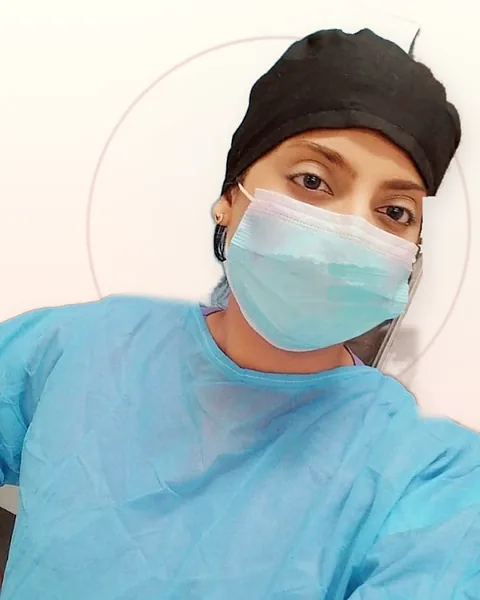
Dr. Ayesha Jawed, MBBS, training in Obstetrics and Gynaecology (CPSP)
PMDC 113388-P. PMDC lists her as Ayesha Javaid. How to check a doctor's registration.
Something else on your mind? WhatsApp +92 334 2382368, Monday to Saturday, 9 am to 9 pm.
ACOG says the first signs may be abnormal bleeding, spotting or a watery discharge. Bleeding may happen after sex, and periods may get heavier. These signs usually have other causes, but get them checked.
No. MedlinePlus lists many other causes, such as polyps, an infection of the cervix, hormone changes or an IUD. But bleeding after sex is one of the symptoms the NHS lists, so it needs a doctor's check soon, even if it stops.
WHO says it can be cured if it's found early and treated quickly. Treatment depends on the size and type of the cancer and whether it has spread. A hospital cancer team plans it after tests.
ACOG ke mutabiq pehli alamat ghair maamooli khoon, spotting ya patla pani jaisa discharge ho sakti hain. Sex ke baad khoon ya periods zyada hona bhi. Aksar shuru mein koi alamat nahi hoti, is liye screening karwayen.
Zaroori nahi. Aksar iski wajah polyp, infection ya hormone ki tabdeeli hoti hai. Lekin NHS ise cervical cancer ki alamat mein ginta hai, is liye doctor se jald check karwayen, chahe khoon ruk jaye.
Ho sakta hai. WHO ke mutabiq cancer se pehle ki tabdeeli aksar koi alamat nahi deti. Is liye 30 saal ke baad screening karwana zaroori hai, chahe aap theek mehsoos karein.
ServicePap smear test in Karachi: who needs it, from what age, how often, what the test is like and what it finds.
 Guide
Uterine prolapse (bachadani ka nikalna): signs, causes, pelvic floor exercises, pessary and surgery options, and leaking urine.
 Guide
Bleeding in early pregnancy is common but can be serious.
Awaiting medical review by Dr. Ayesha Jawed. Written from the sources listed here. General information, not a diagnosis.
Last updated 19 November 2026
Dr. Ayesha JawedMBBS, training in Obstetrics and Gynaecology (CPSP)
Online consult, Rs 499, up to 1 hour. Private, from home, anywhere in Pakistan. Fill in two short steps and WhatsApp opens with your details ready.
Book your consult
Rs 499, up to 1 hour with Dr. Ayesha. Two quick steps.
In an emergency, go to the nearest hospital or call Edhi 115.
This page is coming soon.