 Service
Antenatal care in Karachi: the WHO 8-visit schedule, tests and scans, danger signs, and an online consult with a lady doctor between your hospital visits.

Online consult across Pakistan
Who can try it, how labour goes, which pain relief to ask about, and when a C-section is safer.
Book an online consult
Rs 499, up to 1 hour with Dr. Ayesha. Two quick steps.
Time with a female doctor
Up to 1 hour with Dr. Ayesha, by video, phone or WhatsApp.
Your reports reviewed
Share past tests, scans or prescriptions, and she'll go through them with you.
A clear plan
What to do next, and which tests may help.
A prescription when it's safe
If you need to be seen in person, she'll tell you plainly.
Quick answer
A normal delivery is a vaginal birth, with or without medical help such as an epidural. It happens in stages, and the NHS says active labour usually lasts 8 to 18 hours in a first pregnancy. Dr. Ayesha Jawed doesn't deliver babies, but she can help you plan yours online.
A normal delivery is when your baby is born through the vagina, with or without medical help such as pain relief. Doctors call it a vaginal birth or NVD (normal vaginal delivery), and it happens at a hospital with its own team.
In Roman Urdu, it's normal delivery or operation ke baghair delivery.
Your womb tightens again and again (contractions), the neck of the womb (cervix) opens, you push your baby out, and then the placenta comes out.
This guide is part of our online women's health services, and it follows on from antenatal care in pregnancy.
Many women can plan a normal delivery, but your doctor looks at your health, your baby's position and the placenta first. The NHS says a C-section may be planned if your baby is breech, the placenta is low or you have pre-eclampsia.
Your hospital doctor weighs up:
No exercise, food or tip can promise a normal delivery. Our guide on what helps a normal delivery explains what the evidence supports and what's only a myth.
Often, yes. The Royal College of Obstetricians and Gynaecologists (RCOG) says 3 in 4 women with one past C-section give birth vaginally. That's when labour starts on its own. If you've also had a vaginal birth before, it's about 8 to 9 in 10.
The RCOG says the final choice is yours, made with your healthcare team. Want your case reviewed? WhatsApp Dr. Ayesha your weeks and past operation notes.
Labour has 4 parts: the early (latent) stage, established labour, pushing, and the placenta. The NHS says established labour usually lasts 8 to 18 hours in a first pregnancy, and around 5 to 12 hours after that.
| Stage | What happens | How long (NHS) |
|---|---|---|
| Early (latent) stage | The cervix softens and starts to open | Many hours, or even days. It's usually the longest stage |
| Established labour | The cervix opens from about 4 cm to about 10 cm | Usually 8 to 18 hours in a first pregnancy, around 5 to 12 hours in a 2nd or 3rd |
| Pushing (second stage) | You push your baby out | No longer than 3 hours with a first baby, 2 hours if you've had a baby before |
| Placenta (third stage) | The placenta comes away from the womb | Usually within 30 minutes with an injection to help, up to an hour without one |
The World Health Organization (WHO) said in 2018 that not every labour opens at 1 cm an hour. It says slower progress alone shouldn't be a routine reason to speed up birth.
The NHS says to contact your hospital once contractions come every 5 minutes or more often. Go straight away if your waters break, you bleed, your baby moves less than usual, or you're under 37 weeks and think labour has started.
Go to the hospital now if any of these happen:
Pani toot jaye ya bleeding ho to foran hospital jayen. If you can't get there safely, call Edhi on 115. Don't wait for an online reply in labour.
In Karachi, plan your route weeks before your due date, and leave early once regular contractions start. Our hospital bag checklist lists what to pack for you, your baby and your attendant.
False pains or real labour? Our guide to the signs that labour has begun explains how to tell them apart.
At the hospital, the team checks how far your labour has gone and listens to your baby's heartbeat. In the NHS, a midwife listens with a small handheld device every 15 minutes, though each hospital has its own routine.
Pain relief in labour ranges from breathing and changing position to gas and air, a painkilling injection or an epidural. What you can have depends on your hospital, so ask before your due date.
| Option | What the NHS says |
|---|---|
| Breathing, moving and support | Slow breathing, walking or rocking, and a support person can help you feel calmer |
| Gas and air | You breathe it through a mask or mouthpiece and control it yourself. It eases pain but doesn't remove it |
| Painkilling injection | Takes about 20 minutes to work and lasts 2 to 4 hours, so it isn't advised close to pushing |
| Epidural | Gives complete pain relief in most cases, but only an anaesthetist can give it |
You can, if your hospital has an anaesthetist free when you need one. The NHS says to check whether anaesthetists are always available at your hospital. It takes about 10 minutes to set up and 10 to 15 minutes to work.
The NHS says an epidural can make the pushing stage longer, so forceps or ventouse (suction) may be needed. Your legs may feel heavy, you may need a tube to pass urine, and about 1 in 100 women get a headache afterwards.
Many first-time mothers do, because the NHS says up to 9 in 10 who give birth vaginally get a tear, a graze or an episiotomy. An episiotomy is a small cut between the vagina and the back passage.
Our tips for a normal delivery explain why there's no fixed number of stitches. Healing, pain and bathing after birth are in postnatal care.
Right after birth, you'll usually hold your baby skin to skin while the cord is clamped and the placenta comes out. The NHS says your baby should ideally have a first feed within 1 hour of birth.
If you have an injection to help the placenta out, the NHS says the midwife waits 1 to 5 minutes to clamp the cord. Without it, the cord is cut once it stops pulsing.
The weeks after are covered in our postnatal care in Karachi guide.
Neither is better for everyone, because the safer route depends on you and your baby. The NHS says a C-section is a major operation with a longer recovery, but it's the right choice when a vaginal birth is too risky.
| Normal delivery | C-section | |
|---|---|---|
| Recovery | Usually quicker | The NHS says it usually takes longer. Most women go home 1 to 2 days after |
| When it's chosen | Healthy pregnancy, baby head down | Breech baby, low placenta, pre-eclampsia, or problems in labour |
Planned reasons are listed above. In labour, the NHS says an emergency C-section may be needed if your baby isn't getting enough oxygen, labour isn't progressing, or there's heavy bleeding. Our guide to C-section delivery explains the operation and its risks.
More births now happen in facilities, and many of those end in a C-section. A 2025 study in BMC Pregnancy and Childbirth used the Pakistan Demographic and Health Survey (PDHS). Facility births rose from 52% in 2012-13 to 69% in 2017-18.
About 35% of facility births in 2017-18 were C-sections, and women in private facilities were more likely to have one. The PDHS figure for all births is lower, at 22%, because it also counts births at home. The aim is the safest birth for you, not a set number.
An online consult helps you understand your reports, your options and what to ask the hospital team that'll deliver your baby. Dr. Ayesha Jawed doesn't conduct deliveries, but she can help you prepare, for Rs 499 for up to 1 hour.
She reviews your reports, and you can share clear photos of them on WhatsApp. She can send a prescription when it's safe to do so online.
Dr. Ayesha Jawed is an MBBS doctor and a postgraduate trainee in Obstetrics and Gynaecology (CPSP). Online, she can:
What she can't do online: examine you, do a scan, or help in labour. If you need an exam or a test, she'll tell you to go to a hospital or lab in person. In labour or an emergency, go to the nearest hospital emergency now, or call Edhi on 115.
The bill depends on the hospital, the room and any change of plan in labour. Our guide to normal delivery charges in Pakistan lists dated price reports and what to ask about a quote. Dr. Ayesha's Rs 499 is a consult fee, not a delivery fee.
Consults run Monday to Saturday, 9 am to 9 pm, on +92 334 2382368 (WhatsApp or call). Pay by JazzCash, Easypaisa or bank transfer. See how an online consultation works, or book an appointment.
Four simple steps from your first message to your plan. It's the same for every topic.
Message on WhatsApp
Send a message to +92 334 2382368, or use the form on this page.
Pick a time
Choose a time from Monday to Saturday, 9 am to 9 pm.
Talk by video, phone or WhatsApp
Talk to Dr. Ayesha for up to 1 hour, in the way that suits you.
Get your plan
Leave with clear next steps, and a prescription when it's safe.
She reviews reports you share.
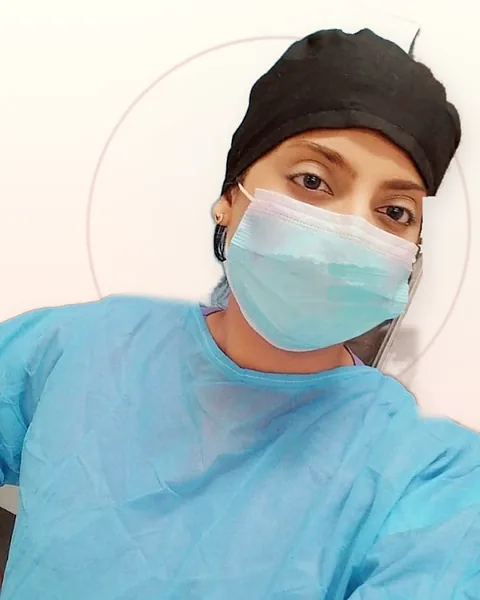
Dr. Ayesha Jawed, MBBS, training in Obstetrics and Gynaecology (CPSP)
PMDC 113388-P. PMDC lists her as Ayesha Javaid. How to check a doctor's registration.
Rs 499per consult, up to 1 hour
Pay by JazzCash, Easypaisa or bank transfer. See fees and payment.
Something else on your mind? WhatsApp +92 334 2382368, Monday to Saturday, 9 am to 9 pm.
Often, yes. The RCOG says 3 in 4 women with one past C-section give birth vaginally. It's planned in hospital after your doctor checks your scar.
Pain is different for every woman. The NHS lists breathing, moving, gas and air, a painkilling injection and an epidural as options. Ask your hospital which ones it offers.
It depends on the hospital. The NHS says only an anaesthetist can give an epidural. Before you choose where to give birth, ask whether one is there at all hours.
The WHO says every woman should have a companion of her choice in labour and birth. Hospital rules differ, so ask yours before your due date.
Agar aap ki sehat theek ho aur bachcha sar ke bal neeche ho to aksar normal delivery ki koshish ho sakti hai. Breech bachcha, neeche placenta ya high BP ho to doctor operation ka mashwara de sakti hain.
NHS ke mutabiq pehle bachche mein asal labour aam tor par 8 se 18 ghante chalta hai. Doosre ya teesre bachche mein 5 se 12 ghante. Har labour alag hota hai.
Aksar ho sakti hai. RCOG ke mutabiq ek operation ke baad 4 mein se 3 auraton ki normal delivery ho jaati hai. Yeh sirf hospital mein ho.
Dard har 5 minute ya us se jaldi aaye to hospital se rabta karein. Pani toot jaye, bleeding ho ya bachcha kam hile to foran hospital jayen, ya Edhi 115 par call karein.
ServiceAntenatal care in Karachi: the WHO 8-visit schedule, tests and scans, danger signs, and an online consult with a lady doctor between your hospital visits.
 Service
C section delivery: why it's done, planned or emergency, anaesthesia, risks and Pakistan's rising rates.
 Service
Postnatal care in Karachi: how long bleeding lasts after delivery, warning signs, the 6-week check-up, and an online consult with a lady doctor for Rs 499.
 Delivery and after
Know the signs that labour has started, how to tell false pains from real ones, and exactly when to call or go to hospital.
 Delivery and after
There's no single price. Here's what dated news reports say, what changes your bill, and what to ask before you book.
 Delivery and after
No tip can promise a vaginal birth. Here's what the evidence supports, what's not proven, and why a C-section is sometimes the safest choice.
 Delivery and after
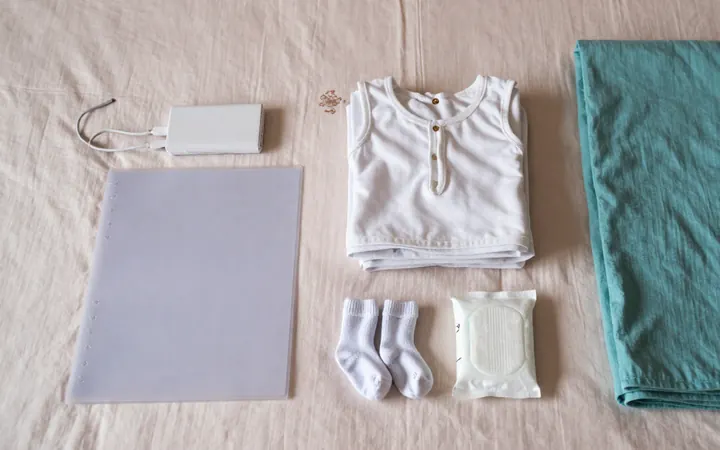
Three simple lists, for you, your baby and your attendant, plus when to pack.
Awaiting medical review by Dr. Ayesha Jawed. Written from the sources listed here. General information, not a diagnosis.
Last updated 19 November 2026
Dr. Ayesha JawedMBBS, training in Obstetrics and Gynaecology (CPSP)
Online consult, Rs 499, up to 1 hour. Private, from home, anywhere in Pakistan. Fill in two short steps and WhatsApp opens with your details ready.
Book your consult
Rs 499, up to 1 hour with Dr. Ayesha. Two quick steps.
In an emergency, go to the nearest hospital or call Edhi 115.
This page is coming soon.