 Service
Antenatal care in Karachi: the WHO 8-visit schedule, tests and scans, danger signs, and an online consult with a lady doctor between your hospital visits.

Emergency warning
Pregnant, or gave birth in the last few weeks, and you have a severe headache, vision problems, pain below the ribs, or sudden swelling of the face, hands or feet? Go to the nearest hospital emergency now, or call Edhi on 115. Don't wait for an online reply.
Pregnant, or had a baby lately, with a severe headache, blurred vision, pain below the ribs, sudden swelling or feeling very unwell? Go to the nearest hospital emergency now, or call Edhi on 115. Don't wait for an online reply.
Book an online consult
Rs 499, up to 1 hour with Dr. Ayesha. Two quick steps.
Quick answer
High BP in pregnancy means a top number of 140 or more, or a bottom number of 90 or more, says NICE in the UK. It can be a sign of pre-eclampsia, which needs regular checks and care. Warning signs mean hospital now.
Go to the nearest hospital emergency now if you're pregnant, or gave birth in the last few weeks. Do this if you have any pre-eclampsia warning sign below. The UK National Health Service (NHS) says these signs need checking immediately.
Go to the nearest hospital emergency now, or call Edhi on 115. Don't wait for an online reply, or to see if it passes.
The American College of Obstetricians and Gynecologists (ACOG) adds trouble breathing, sudden weight gain and shoulder pain. A fit (seizure) is eclampsia, an emergency.
Tell your husband and mother-in-law these signs too. The CLIP trial in Sindh cites research that husbands and mothers-in-law often decide when a woman gets care.
Know your nearest hospital before you need it. See our list of government hospitals for delivery in Karachi.
A top number of 140 or more, or a bottom number of 90 or more, is high blood pressure in pregnancy. The UK's National Institute for Health and Care Excellence (NICE) says so, and treats 160/110 or higher as severe.
Doctors call high blood pressure hypertension. There are a few types in pregnancy:
| Type | When it starts | What it means |
|---|---|---|
| Chronic hypertension | Before pregnancy, or before 20 weeks | High blood pressure you already had, or you already take blood pressure medicine (NICE). |
| Gestational hypertension | After 20 weeks | New high blood pressure without a lot of protein in your urine (NICE). ACOG says it usually goes away after birth. |
| Pre-eclampsia | After 20 weeks, or after the birth | New high blood pressure plus protein in your urine, or signs of kidney or liver harm (NICE). It can slow the baby's growth. |
| Eclampsia | In pregnancy or after the birth | Fits (seizures) linked to pre-eclampsia (NICE). It's an emergency. |
Yes. High blood pressure before 20 weeks usually means chronic hypertension, says NICE. ACOG says blood pressure normally goes down in the first half of pregnancy.
A new rise after 20 weeks needs checks for pre-eclampsia. The NHS says it can happen at any point, but it's most likely from 20 weeks. ACOG says it's often in the last 3 months.
MedlinePlus, a US government health site, says some swelling of the feet and ankles is normal in pregnancy. It's sudden swelling of the face, hands or feet that's the warning sign.
High blood pressure in pregnancy can harm both you and your baby, so it needs regular checks and care from a doctor. The NHS says that in most cases pre-eclampsia isn't severe.
For the baby, the NHS lists slower growth in the womb and being born too early. ACOG says high blood pressure may reduce blood flow to the placenta, the organ that feeds your baby.
Sometimes pre-eclampsia leads to serious, possibly life-threatening problems. The NHS lists:
The World Health Organization (WHO) says pre-eclampsia affects 3 to 8% of women who give birth worldwide. WHO says high blood pressure disorders caused about 16% of mothers' deaths globally, around 42,000 deaths in 2023.
It matters here. A 2022 BMJ Open study protocol from Karachi says eclampsia accounts for more than 12% of direct maternal deaths in Pakistan.
The NHS says it's not known what causes pre-eclampsia. MedlinePlus says it's thought to start in the placenta.
You're more likely to get pre-eclampsia if you already have high blood pressure, diabetes or kidney disease. The NHS says a past pregnancy with it counts too. Lupus and some other autoimmune conditions raise the risk too.
The NHS lists more things that raise the risk:
A South Asian background is on that list, so it's worth knowing in Pakistan. WHO says a risk factor doesn't mean you'll get pre-eclampsia. It means you need closer checks.
The NHS also lists pre-eclampsia as a possible problem with gestational diabetes. Older mothers can read our guide to pregnancy after 35.
Blood pressure and urine are checked at every antenatal visit, says the NHS. If a doctor suspects pre-eclampsia, you'll usually go to hospital for blood tests and baby growth scans. You can't feel the early signs yourself.
ACOG says you may also have liver, kidney and platelet tests. Our guide to tests during pregnancy explains the routine checks.
The NHS says there's no cure for pre-eclampsia, but treatment helps. Symptoms usually get better once the baby is born.
If it isn't severe, ACOG says you may stay at home with close checks. You might measure your blood pressure at home and count your baby's movements every day.
Already on blood pressure medicine? Tell a doctor once you know you're pregnant, because NICE says some types need changing. Don't stop any medicine yourself.
There's no sure way to prevent pre-eclampsia, says MedlinePlus. Going to every antenatal visit lets a doctor spot your risk early. WHO also says early and regular care is essential.
Had pre-eclampsia before? ACOG says your risk is higher next time, so talk to a doctor before your next pregnancy.
Yes, the NHS says pre-eclampsia can start in the days or weeks after your baby is born. So the warning signs still matter all through your chilla. Go to hospital for the same signs.
MedlinePlus says it most often starts within 48 hours of the birth. It says you're still at risk for up to 6 weeks.
After you go home, the NHS says you may need blood pressure medicine for a few weeks and regular blood pressure checks.
NICE advises a medical review 6 to 8 weeks after the birth for every woman who had pre-eclampsia or gestational hypertension. If you're breastfeeding, ACOG says to ask which blood pressure medicines are safe.
ACOG says women who had pre-eclampsia have a higher risk later in life of high blood pressure, stroke, heart attack and kidney disease. NICE advises talking to a doctor about lowering that risk, for example by not smoking and keeping a healthy weight.
Our page on care after delivery covers your other checks in the weeks after the birth.
An online consult can talk through your readings and symptoms, explain your risk and plan your next checks. It can't measure your blood pressure, test your urine or handle an emergency.
Dr. Ayesha Jawed, MBBS, postgraduate trainee in Obstetrics and Gynaecology (CPSP), gives online consultations by video, call or WhatsApp. She talks it through, answers your questions, gives advice and follows up.
| What you need | Online consult | In person |
|---|---|---|
| A warning sign, such as a bad headache or blurred vision | No. Don't message first. | Hospital emergency now, or Edhi 115 |
| Blood pressure and urine checks | Talk through the readings you bring | Antenatal visit, hospital or lab |
| Blood tests and growth scans | Talk through the reports you bring | Hospital or lab |
| Delivery | No | Hospital |
She reviews your reports, and you can share clear photos of them on WhatsApp. She can send a prescription when it's safe to do so online.
The fee is Rs 499 for up to 1 hour, Monday to Saturday, 9 am to 9 pm. She can't promise a result. Read how online consults work for the steps.
Send a WhatsApp message or call +92 334 2382368, Monday to Saturday, 9 am to 9 pm. Choose video, call or WhatsApp, and pay Rs 499 by JazzCash, Easypaisa or bank transfer. See our consult fees page.
Bring these to the consult:
Questions you might ask:
NICE ke mutabiq hamal mein BP 140/90 ya us se zyada ho to high hai. Ye pre-eclampsia ki nishani ho sakti hai. Har high reading par doctor se check karwayen.
Four simple steps from your first message to your plan. It's the same for every topic.
Message on WhatsApp
Send a message to +92 334 2382368, or use the form on this page.
Pick a time
Choose a time from Monday to Saturday, 9 am to 9 pm.
Talk by video, phone or WhatsApp
Talk to Dr. Ayesha for up to 1 hour, in the way that suits you.
Get your plan
Leave with clear next steps, and a prescription when it's safe.
She reviews reports you share.
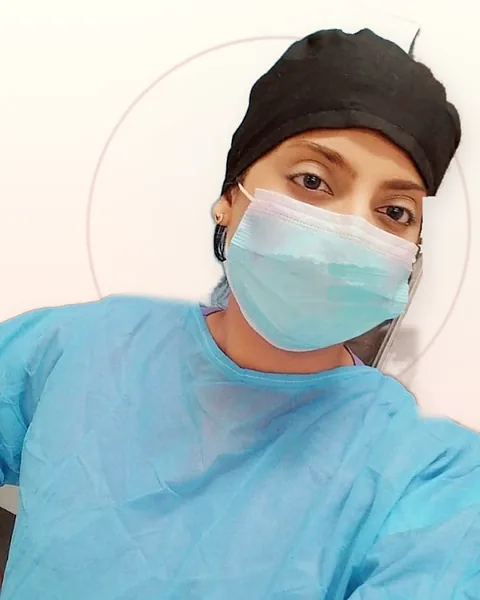
Dr. Ayesha Jawed, MBBS, training in Obstetrics and Gynaecology (CPSP)
PMDC 113388-P. PMDC lists her as Ayesha Javaid. How to check a doctor's registration.
Something else on your mind? WhatsApp +92 334 2382368, Monday to Saturday, 9 am to 9 pm.
NICE says 140/90 mmHg or higher is high blood pressure, and 160/110 or higher is severe. ACOG says one high reading may be checked again, because blood pressure changes during the day. With a warning sign, go to hospital now.
Yes, if a doctor asks you to. ACOG says some women with high blood pressure measure it at home. Write down each reading with the date and time. A warning sign means hospital, whatever the reading says.
No. MedlinePlus says some swelling of the feet and ankles is normal in pregnancy. Sudden swelling of the face, hands or feet is a warning sign, says the NHS. That needs a hospital check now.
NICE ke mutabiq 140/90 ya us se zyada BP high hai, aur 160/110 ya us se zyada shadeed. Har high reading par doctor se check karwayen. Sar dard ya nazar ki kharabi ho to foran hospital jayein.
NHS ke mutabiq shadeed sar dard, dhundli nazar, pasliyon ke neeche dard, chehre, haathon ya pairon par achanak soojan, aur ulti. In mein se koi bhi alamat ho to foran hospital emergency jayein ya Edhi 115 par call karein.
Haan. NHS kehta hai ye delivery ke kuch din ya hafton baad bhi ho sakta hai. MedlinePlus ke mutabiq zyada tar pehle 48 ghanton mein hota hai. Wohi alamat hon to foran hospital jayein.
Khana band na karein. NICE kehta hai jin ka BP pehle se high ho unhein namak kam karne, sehatmand khane aur exercise ki salah di jaye. Koi desi nuskha ya dawa khud shuru na karein.
ServiceAntenatal care in Karachi: the WHO 8-visit schedule, tests and scans, danger signs, and an online consult with a lady doctor between your hospital visits.
 Service
Normal delivery explained: who can try it, the stages of labour, pain relief, tears and when a C-section is needed.
 Service
C section delivery: why it's done, planned or emergency, anaesthesia, risks and Pakistan's rising rates.
Awaiting medical review by Dr. Ayesha Jawed. Written from the sources listed here. General information, not a diagnosis.
Last updated 19 November 2026
Dr. Ayesha JawedMBBS, training in Obstetrics and Gynaecology (CPSP)
Online consult, Rs 499, up to 1 hour. Private, from home, anywhere in Pakistan. Fill in two short steps and WhatsApp opens with your details ready.
Book your consult
Rs 499, up to 1 hour with Dr. Ayesha. Two quick steps.
In an emergency, go to the nearest hospital or call Edhi 115.
This page is coming soon.