 Service
Antenatal care in Karachi: the WHO 8-visit schedule, tests and scans, danger signs, and an online consult with a lady doctor between your hospital visits.

Pregnant, with a severe headache, blurred vision, pain below the ribs or sudden swelling? Or is your baby moving less? Go to the nearest hospital emergency now, or call Edhi on 115. Don't wait for an online reply.
Book an online consult
Rs 499, up to 1 hour with Dr. Ayesha. Two quick steps.
Quick answer
Gestational diabetes is high blood sugar that first appears in pregnancy and usually goes away after birth. It rarely causes symptoms, so it's found with a glucose tolerance test, usually at 24 to 28 weeks. Food changes, walking and, if needed, medicine keep sugar in range and lower the risks for you and your baby.
Go to the nearest hospital emergency now, or call Edhi on 115, if you have any pre-eclampsia warning sign below. Don't wait for an online reply. The NHS says any of these signs needs checking immediately.
The NHS also says to get urgent help if your baby moves less than usual or its pattern changes. Don't wait until the next day. See your baby's movements.
If you take insulin, very low sugar with a fit, or not responding normally, is an emergency too, says the NHS. Gestational diabetes can bring pre-eclampsia, so read our guide to high BP in pregnancy.
Gestational diabetes is high blood sugar (glucose) that starts during pregnancy and usually goes away after birth. It can start at any stage, but the NHS says it's more common in the second or third trimester.
Pregnancy hormones get in the way of insulin, the hormone that keeps blood sugar normal. The American College of Obstetricians and Gynecologists (ACOG) says that when your body can't make enough extra insulin, your sugar goes up.
It's common in Pakistan. A 2024 review pooled 9 hospital studies of 27,034 pregnant women. About 16.7% had it, roughly 1 in 6. The Sindh studies came to 13.2%. Hospital studies may not match every area.
Gestational diabetes usually causes no symptoms, so most cases are found only by a blood test. If sugar gets very high, the NHS lists thirst, peeing more, a dry mouth, tiredness, blurred eyesight, and itching or thrush.
Many of these are common in pregnancy anyway, the NHS says. Only the test can tell you.
Any pregnant woman can get it, but the NHS says your risk is higher if you're of South Asian origin, which includes Pakistani women. Its full list of risk factors:
ACOG also lists polycystic ovary syndrome (PCOS), high blood pressure and not being active. See our guide to pregnancy with PCOS.
The NHS says anyone with 1 or more risk factors should be offered the test. South Asian origin is one, so ask for it.
It's tested with an oral glucose tolerance test (OGTT), usually at 24 to 28 weeks, says the NHS. If you had gestational diabetes before, you're tested earlier, soon after your booking visit, and again at 24 to 28 weeks if that's normal.
The test takes about 2 hours. You don't eat or drink for 8 to 10 hours before, though you can usually drink water. You give a blood sample, drink a glucose drink, rest for 2 hours, then give a second sample. Our guide to tests during pregnancy lists the other checks.
A 2018 survey of 210 doctors in Pakistan's major cities found 26% used a fasting blood sugar test to screen. About 61% said they followed World Health Organization (WHO) criteria to diagnose. The UK's National Institute for Health and Care Excellence (NICE) says a fasting test alone shouldn't be used to judge your risk.
If you were only given a fasting test, ask your doctor whether you need the full OGTT.
NICE diagnoses it at a fasting sugar of 5.6 mmol/L or more on the OGTT. A 2-hour sugar of 7.8 mmol/L or more also counts. Other guidelines use mg/dL.
| OGTT sample | NICE (UK), in mmol/L | WHO, IADPSG and ADA, in mg/dL |
|---|---|---|
| Fasting | 5.6 or above | 92 or above |
| 1 hour after the drink | Not used | 180 or above |
| 2 hours after the drink | 7.8 or above | 153 or above |
The mg/dL column comes from a 2024 Pakistani review. It lists these cut-offs for the WHO, the International Association of Diabetes and Pregnancy Study Groups (IADPSG) and the American Diabetes Association (ADA). The review says Pakistani studies use a variety of criteria.
NICE advises keeping finger-prick sugar below these levels. It says to do this only if sugar doesn't go too low:
NICE says targets should be agreed with each woman, so your doctor may set yours differently. If your meter shows mg/dL, ask for your targets in mg/dL too.
"Fasting sugar" is the morning test before you eat. It isn't about the Ramadan fast.
You can still eat roti, chawal, daal and fruit, in smaller and steadier amounts. An NHS hospital booklet for Pakistani women says not to cut out carbohydrates. It says to spread them through the day and pick high-fibre ones.
The NHS says to eat 3 regular meals, not skip any, and see a dietitian. The Cambridge University Hospitals (NHS) booklet gives this sample day. It's a guide, not a fixed chart:
| Time | What the booklet suggests |
|---|---|
| Early breakfast | A small pot of yogurt with berries and seeds |
| About 2 hours later | 1 small wholemeal chapati with meat or vegetable curry |
| Lunch | 1 medium or 2 small wholemeal chapatis with meat or vegetable curry |
| 1.5 to 2 hours later | A piece of fruit or yogurt |
| Dinner | 4 tablespoons of cooked rice, or 4 egg-sized potatoes, plus protein and vegetables |
It says to have only one type of carbohydrate at a time, so roti or chawal, not both.
You don't need a fully sugar-free diet, says the NHS. For general eating in pregnancy, see our pregnancy diet chart. NICE suggests a 30 minute walk after a meal too.
Many women manage with food and walking alone. The NHS says tablets or insulin are added if sugar isn't stable 1 to 2 weeks after those changes. They're also added if it's very high at diagnosis. It usually goes away after birth.
Sugar often rises as pregnancy goes on, so you may need medicine later. That doesn't mean you've failed. Your doctor decides which medicine and how much, and please don't stop insulin on your own.
The NHS says you'll get a finger-prick testing kit. You'll usually test before breakfast and 1 hour after each meal. Keep a written log.
Doctors currently advise against it. A 2022 medical review says the present advice is against Ramadan fasting for pregnant women with diabetes. It can cause both low and high sugar. Talk to your doctor before you decide.
The review notes that many women don't tell their doctor they plan to fast. Please tell yours. For a religious ruling, ask a scholar you trust. Our guide to fasting during pregnancy covers roza, sehri and iftar.
The NHS says it can make your baby grow larger than usual, which can make birth harder. It also raises the chance of early birth, too much fluid around the baby, pre-eclampsia, and low sugar or jaundice in your newborn.
The NHS says stillbirth is a rare risk. NICE says good sugar control lowers these risks.
The NHS says you should be offered extra scans at about 28, 32 and 36 weeks, done in person. The ideal time to give birth is usually around 38 to 40 weeks.
If you haven't given birth by 40 weeks and 6 days, you'll usually be offered induction or a caesarean. See C-section delivery.
The NHS says your baby's sugar is checked from 2 to 4 hours after birth. Feed your baby within 30 minutes, then every 2 to 3 hours. The NHS says your own sugar medicines are usually stopped after birth.
You'll need a diabetes blood test 6 to 13 weeks after birth, then once a year if it's normal, says the NHS. ACOG advises a test at 4 to 12 weeks. This matters, because ACOG says 15 to 70% of women who had gestational diabetes get diabetes later in life.
The check is part of your postnatal care. Before your next pregnancy, the NHS says to get checked for diabetes first. See pregnancy care.
An online consult can talk through your OGTT result, sugar readings and food, and plan your next tests. It can't do a blood test, a scan, a blood pressure check or a delivery.
Dr. Ayesha Jawed, MBBS, postgraduate trainee in Obstetrics and Gynaecology (CPSP), gives online consultations by video, call or WhatsApp. She talks it through, answers your questions, gives advice and follows up.
She reviews your reports, and you can share clear photos of them on WhatsApp. She can send a prescription when it's safe to do so online.
| Online is fine for | You'll need to go in person for |
|---|---|
| Talking through your OGTT or fasting sugar result | The OGTT and other blood tests, at a lab |
| Talking about your sugar readings | Growth scans of your baby |
| Food swaps and planning which tests you need | Blood pressure and baby heartbeat checks |
| Follow-up after birth, including the 6 to 13 week test | Labour, delivery and any emergency |
She can't promise a result. See how online consults work and the consult fees: Rs 499 for up to 1 hour.
Send a WhatsApp message or call +92 334 2382368, Monday to Saturday, 9 am to 9 pm. Choose video, call or WhatsApp, and pay Rs 499 by JazzCash, Easypaisa or bank transfer.
ACOG says your sugar log helps your doctor give the right care. Bring these to the consult:
Also ask which cut-offs your lab used.
Four simple steps from your first message to your plan. It's the same for every topic.
Message on WhatsApp
Send a message to +92 334 2382368, or use the form on this page.
Pick a time
Choose a time from Monday to Saturday, 9 am to 9 pm.
Talk by video, phone or WhatsApp
Talk to Dr. Ayesha for up to 1 hour, in the way that suits you.
Get your plan
Leave with clear next steps, and a prescription when it's safe.
She reviews reports you share.
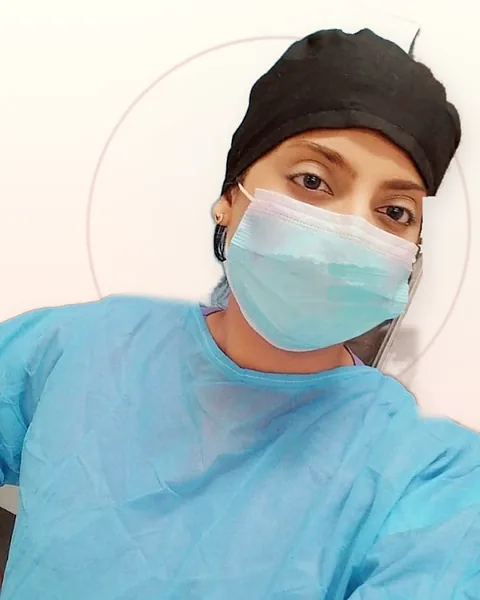
Dr. Ayesha Jawed, MBBS, training in Obstetrics and Gynaecology (CPSP)
PMDC 113388-P. PMDC lists her as Ayesha Javaid. How to check a doctor's registration.
Something else on your mind? WhatsApp +92 334 2382368, Monday to Saturday, 9 am to 9 pm.
NICE advises keeping finger-prick sugar below 5.3 mmol/L before breakfast. After meals, it's below 7.8 mmol/L at 1 hour, or 6.4 mmol/L at 2 hours. Your doctor may agree different targets with you, so ask for yours in your meter's unit.
Roti and rice, yes, in smaller portions. An NHS booklet for Pakistani women suggests wholemeal chapati and basmati rice, one type at a time. It says mithai like jalebi and gulab jamun raise sugar fast, so keep them for celebrations.
No, it doesn't. ACOG says children of women who had it may have a higher chance of being overweight or getting diabetes later. Tell your baby's doctor you had it, so your child's sugar can be checked as they grow.
NHS ke mutabiq OGTT test aam tor par 24 se 28 hafte par hota hai. Agar pichli pregnancy mein sugar thi to test jaldi hota hai. Test se pehle 8 se 10 ghante kuch na khayein, aam tor par sirf paani pi sakti hain.
Aksar haan. Lekin NHS kehta hai delivery ke 6 se 13 hafte baad sugar ka test karwayen, phir har saal. Aage chal kar type 2 diabetes ka khatra zyada rehta hai.
Ek 2022 medical review ke mutabiq abhi doctor pregnancy mein diabetes ke saath roza na rakhne ka mashwara dete hain. Sugar bohat kam ya zyada ho sakti hai. Pehle doctor se baat karein, aur masle ke liye kisi aalim se poochein.
ServiceAntenatal care in Karachi: the WHO 8-visit schedule, tests and scans, danger signs, and an online consult with a lady doctor between your hospital visits.
 Service
Normal delivery explained: who can try it, the stages of labour, pain relief, tears and when a C-section is needed.
 Service
C section delivery: why it's done, planned or emergency, anaesthesia, risks and Pakistan's rising rates.
Awaiting medical review by Dr. Ayesha Jawed. Written from the sources listed here. General information, not a diagnosis.
Last updated 19 November 2026
Dr. Ayesha JawedMBBS, training in Obstetrics and Gynaecology (CPSP)
Online consult, Rs 499, up to 1 hour. Private, from home, anywhere in Pakistan. Fill in two short steps and WhatsApp opens with your details ready.
Book your consult
Rs 499, up to 1 hour with Dr. Ayesha. Two quick steps.
In an emergency, go to the nearest hospital or call Edhi 115.
This page is coming soon.