 Guide
How heavy is too heavy? Signs of heavy periods, causes like fibroids, the anaemia link, treatments and when to see a doctor.

Online consult across Pakistan
Not sure if your cycle is normal? Here's what counts as irregular, what causes it, and how it's treated.
Book an online consult
Rs 499, up to 1 hour with Dr. Ayesha. Two quick steps.
Time with a female doctor
Up to 1 hour with Dr. Ayesha, by video, phone or WhatsApp.
Your reports reviewed
Share past tests, scans or prescriptions, and she'll go through them with you.
A clear plan
What to do next, and which tests may help.
A prescription when it's safe
If you need to be seen in person, she'll tell you plainly.
Quick answer
Periods are irregular when the gap between them is shorter than 21 days or longer than 35 days, or when your usual pattern changes. Common causes include stress, weight change, polycystic ovary syndrome (PCOS), thyroid problems, hormonal contraception and perimenopause. Treatment depends on the cause, so a doctor finds that first, often with simple tests.
A period is irregular when the gap is under 21 days or over 35 days, says the UK's National Health Service (NHS). Count from the first day of one period to the first day of the next.
The average gap is around 28 days, and it can move a little from month to month.
| Your pattern | What the NHS says | Your next step |
|---|---|---|
| Gap of 21 to 35 days | Inside the usual range | Keep noting your dates |
| Gap shorter than 21 days | Counts as irregular | See a doctor if it keeps happening |
| Gap longer than 35 days | Counts as irregular | Take a pregnancy test if you could be pregnant |
| Bleeding for more than 7 days | A reason to see a doctor | Book a check |
| Missed 3 periods in a row | A reason to see a doctor | Book a check |
| Bleeding between periods or after sex | A reason to see a doctor | Book a check |
Many young women aren't sure what's normal. In a 2020 study of 1,777 female university students in Lahore, only 39.5% gave the right answer about menstrual cycle length.
So start with your own dates, and mark the first day of each period. Our period calculator can help you count the gap between them.
Common causes include puberty, pregnancy, hormonal contraception, stress, weight changes, too much exercise, PCOS, thyroid problems and perimenopause, says the NHS. The likely cause often depends on your age.
| Age | Common causes |
|---|---|
| Teens, in the first years of periods | The body can take some months to get into a regular pattern. MedlinePlus says irregular bleeding is more common in teenagers. |
| 20s and 30s | Pregnancy, hormonal contraception (the progestogen-only pill, the injection or the intrauterine system, IUS), polycystic ovary syndrome (PCOS) and thyroid problems. |
| 40s | Perimenopause, the years before periods stop. Menopause usually comes between 45 and 55, and periods may come more often or less often before it. |
| Any age | Stress and anxiety, losing or gaining a lot of weight, and exercising too much. |
PCOS is a hormone condition, and irregular periods are one of its signs. The World Health Organization (WHO) says it affects 10 to 13% of women of reproductive age. Up to 70% of them don't know they have it.
The NHS renamed it PMOS in 2026, but we'll keep saying PCOS. Our page on PCOS treatment options explains how it's managed.
The NHS says the average girl gets her first period around 12. Our guide to when periods usually start covers the early years.
Periods that come early, less than 21 days apart, count as irregular, says the NHS. Common causes include stress, hormonal contraception and perimenopause, the years before periods stop.
MedlinePlus, from the US National Library of Medicine, says women in their 40s may have periods less often, or the gap may get shorter. The NHS says periods in perimenopause can also get heavier or lighter.
See a doctor if early periods keep happening. Spotting isn't a period, and bleeding between periods is its own reason to get checked.
See a doctor if your periods are irregular, last more than 7 days, or you bleed between periods or after sex, says the NHS. Also go if they come with weight gain, tiredness, facial hair, or dry or oily skin.
The NHS also says to see a doctor if:
Not sure if yours counts as irregular? Message Dr. Ayesha your last 3 period dates on WhatsApp at +92 334 2382368.
The usual tests are a pregnancy test, blood tests for blood count, thyroid and hormone levels, and sometimes a pelvic ultrasound, says MedlinePlus. Your doctor picks them from your history, so you won't always need all of them.
| Test | Why it's done | Where |
|---|---|---|
| Pregnancy test | Rules out pregnancy, a common reason for a missed period. | At home or a lab |
| Full blood count (CBC) | Checks for anaemia. The NHS says heavy periods are a very common cause of iron deficiency anaemia. | Lab |
| Thyroid function test | Thyroid problems can make periods irregular. | Lab |
| Hormone tests | Checks hormones such as prolactin and testosterone. For PCOS, the NHS says they also check insulin resistance. | Lab |
| Pelvic ultrasound | Looks for problems in the womb or ovaries. The NHS says scans for PCOS are only done for adults aged 18 or over. | Hospital or imaging centre |
Dr. Ayesha can't do tests online. She can suggest which ones fit your history, and you get them done at a lab or hospital near you. Then she can go through the reports with you.
Treatment for irregular periods depends on the cause. The NHS says it isn't always needed. When it is, a doctor treats the cause, such as PCOS, a thyroid problem or a contraception side effect.
Please don't start hormone pills, syrups or desi nuskhe on your own. We found no medical source that says a home remedy makes periods regular. A doctor should choose any medicine and its dose, which is why we don't name tablets here.
Yes, an unmarried girl can be checked and treated for irregular periods. The first step is a talk about her periods and symptoms, because no internal exam is done in an online consult.
Irregular periods have nothing to do with being married. The causes are the same ones the NHS lists, such as stress, weight change, PCOS and thyroid problems.
Blood tests often come first. The NHS says scans for PCOS are only done for adults aged 18 or over.
A girl can message for herself, and her mother can join the call if she'd like. If PCOS is the worry, our guide to PCOS in unmarried girls covers diagnosis, treatment and privacy.
It's an emergency if you could be pregnant and you bleed with severe tummy pain, shoulder pain, or feeling faint or dizzy, says the NHS. Bleeding that soaks a pad soon after you put it on is an emergency in pregnancy too.
Go to the nearest hospital emergency now, or call Edhi on 115. Don't wait for an online reply.
Heavy periods that aren't an emergency still need a check. The NHS says your periods are heavy if you:
The NHS says heavy periods are a very common cause of iron deficiency anaemia, which can leave you tired and short of breath. Our page on heavy periods and what to do goes further.
Not always. A single late period, period pain and spotting between periods are separate problems that can happen with or without irregular cycles. Each one has its own guide on this site.
A period can be late because of pregnancy, stress, weight change, too much exercise, PCOS or contraception. Our guide on why a period is late covers when to test and what to do next.
The NHS suggests a heat pad or hot water bottle on your tummy, a warm bath and gentle exercise like walking. Our period pain relief guide explains what's safe.
The NHS lists bleeding between periods as a reason to see a GP. Our guide to spotting between periods explains the common causes and when to get it checked.
Only a doctor should decide this, because the method has to suit your health. Our guide on delaying periods for Umrah explains the options, and for the religious ruling, please ask a scholar.
An online consult can go through your period dates and symptoms, review your reports and plan the tests you may need. It also gives advice and follow-up. It can't do an examination, a scan or emergency care.
Dr. Ayesha Jawed, MBBS, postgraduate trainee in Obstetrics and Gynaecology (CPSP), gives online consultations by video, call or WhatsApp.
She can't promise your periods will become regular. Read how online consults work for more detail.
Send a WhatsApp message or call +92 334 2382368, Monday to Saturday, 9 am to 9 pm. Choose video, call or WhatsApp, and pay Rs 499 by JazzCash, Easypaisa or bank transfer. Have your period dates ready before the consult.
It'll help to have these ready:
Questions you might ask:
You can also book an online appointment through the form.
Agar do periods ke beech 21 din se kam ya 35 din se zyada ka faasla ho to NHS ke mutabiq periods irregular hain. Stress, wazan ka badalna, PCOS, thyroid aur contraception iski aam wajah hain.
Four simple steps from your first message to your plan. It's the same for every topic.
Message on WhatsApp
Send a message to +92 334 2382368, or use the form on this page.
Pick a time
Choose a time from Monday to Saturday, 9 am to 9 pm.
Talk by video, phone or WhatsApp
Talk to Dr. Ayesha for up to 1 hour, in the way that suits you.
Get your plan
Leave with clear next steps, and a prescription when it's safe.
She reviews reports you share.
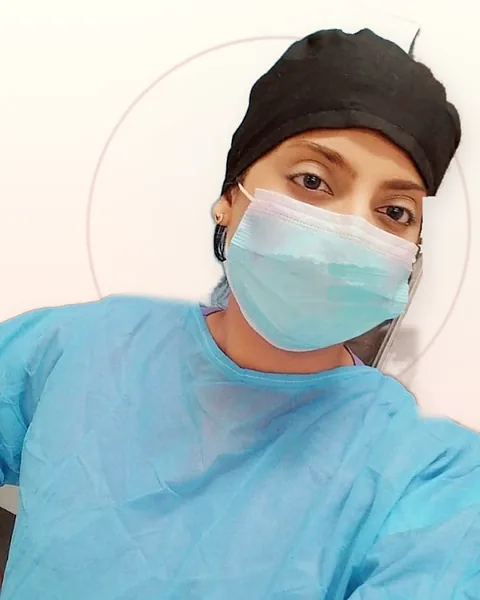
Dr. Ayesha Jawed, MBBS, training in Obstetrics and Gynaecology (CPSP)
PMDC 113388-P. PMDC lists her as Ayesha Javaid. How to check a doctor's registration.
Rs 499per consult, up to 1 hour
Pay by JazzCash, Easypaisa or bank transfer. See fees and payment.
Something else on your mind? WhatsApp +92 334 2382368, Monday to Saturday, 9 am to 9 pm.
The NHS says periods are irregular when the gap between them is shorter than 21 days or longer than 35 days. So a cycle that runs past 35 days counts. See a doctor if you've missed 3 periods in a row.
They can make it harder, but they don't mean you can't get pregnant. The NHS says to see a GP if you have irregular periods and you're struggling to conceive. It suggests sex every 2 or 3 days through your cycle, and tests or treatment may follow.
They can be. WHO lists irregular or infrequent periods as a possible sign of PCOS. But stress, weight change and thyroid problems cause them too. A doctor uses your history and blood tests to tell them apart.
MedlinePlus says periods may not come back for more than 6 months after you stop birth control pills or hormone shots. If you're worried, or you've missed 3 periods in a row, see a doctor.
Ilaj wajah par depend karta hai. NHS kehta hai ke kabhi kabhi ilaj ki zaroorat nahi hoti. PCOS ya thyroid ho to doctor uska ilaj karti hai. Khud se goliyan shuru na karein.
NHS ke mutabiq aam taur par cycle lagbhag 28 din ka hota hai. 21 din se kam ya 35 din se zyada ho to periods irregular kehlate hain.
Ji haan. Pehle periods aur nishaniyon ke baare mein baat hoti hai, aur aksar blood tests hote hain. Online consult mein koi internal exam nahi hota.
Jab faasla 21 din se kam ya 35 din se zyada ho. Doctor ko dikhayein agar periods 7 din se zyada chalein, periods ke beech ya sex ke baad bleeding ho, ya lagatar 3 periods miss hon.
GuideHow heavy is too heavy? Signs of heavy periods, causes like fibroids, the anaemia link, treatments and when to see a doctor.
 Service
PCOS treatment in Karachi: how periods, skin, weight and fertility are managed, which medicines doctors may use, and an online consult with Dr. Ayesha.
 Guide
Fibroids are common womb growths that aren't cancer.
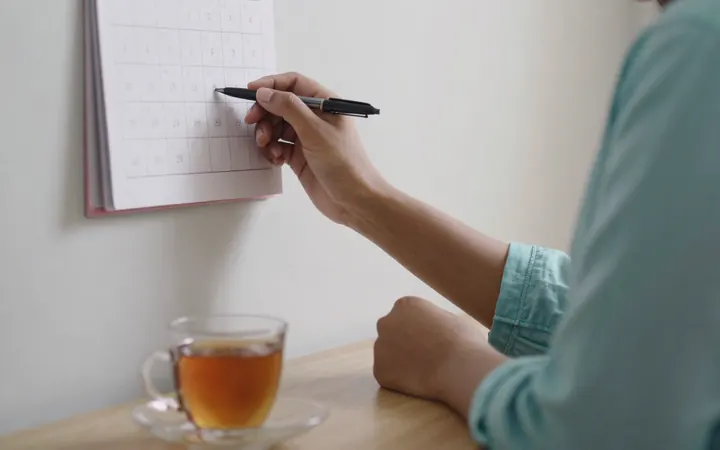 Periods
Most late periods aren't serious. Here are the common reasons, when to take a pregnancy test, and when to see a doctor.
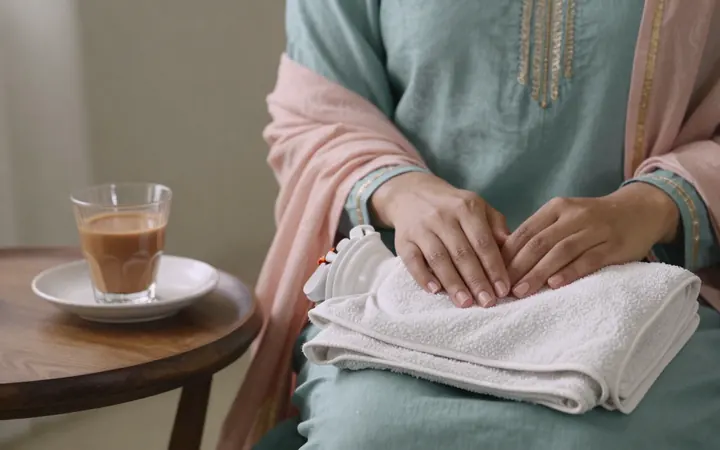 Periods
Heat, rest and gentle movement ease most period cramps. Here is what works, what is only tradition, and which pain needs a check-up.
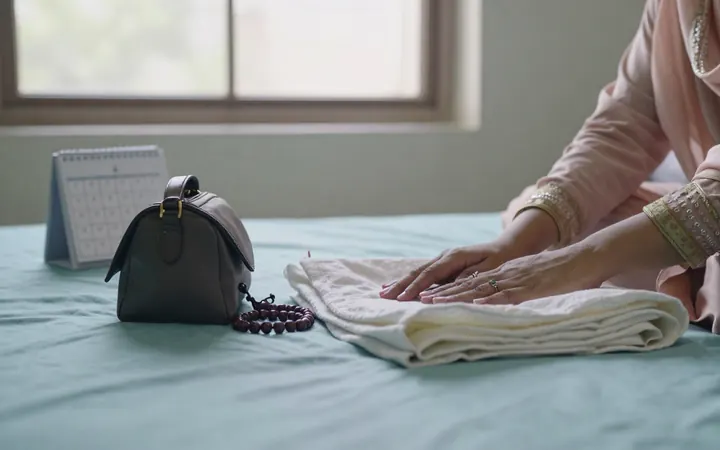 Periods
Planning Umrah or Hajj? Here's how doctors delay a period, how early to plan, and why the choice shouldn't come from a friend or a shop.
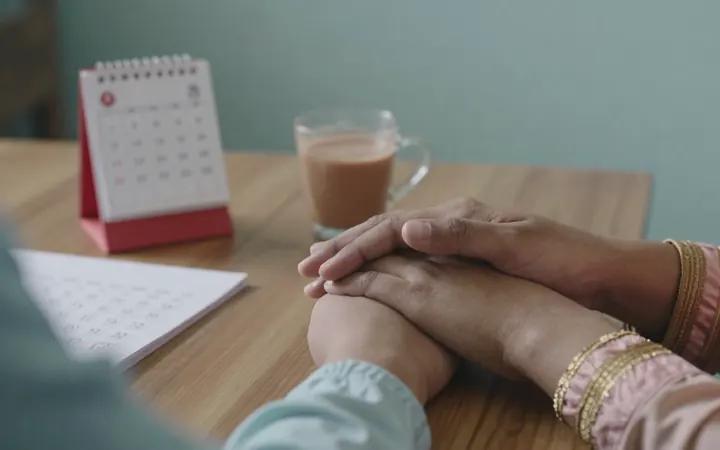 Periods
A guide for mothers and daughters. It covers when girls usually start their periods, what is normal in the first years, and when a doctor can help.
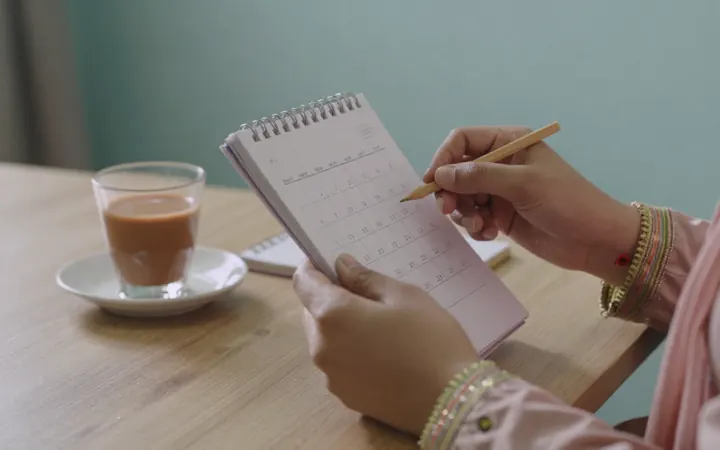 Periods
Light bleeding between periods is often harmless. Here are the usual causes, which ones need a check, and what to do first.
Awaiting medical review by Dr. Ayesha Jawed. Written from the sources listed here. General information, not a diagnosis.
Last updated 19 November 2026
Dr. Ayesha JawedMBBS, training in Obstetrics and Gynaecology (CPSP)
Online consult, Rs 499, up to 1 hour. Private, from home, anywhere in Pakistan. Fill in two short steps and WhatsApp opens with your details ready.
Book your consult
Rs 499, up to 1 hour with Dr. Ayesha. Two quick steps.
In an emergency, go to the nearest hospital or call Edhi 115.
This page is coming soon.