 Service
Antenatal care in Karachi: the WHO 8-visit schedule, tests and scans, danger signs, and an online consult with a lady doctor between your hospital visits.

Emergency warning
Pregnant, or might be, and you have severe tummy pain, pain in your shoulder, or heavy bleeding that soaks a pad? Or bleeding with feeling sick, faint or dizzy? Go to the nearest hospital emergency now, or call Edhi on 115. Don't wait for an online reply.
Book an online consult
Rs 499, up to 1 hour with Dr. Ayesha. Two quick steps.
Quick answer
A miscarriage is the loss of a pregnancy before 24 weeks. The main sign is vaginal bleeding, often with cramping. Bleeding isn't always a miscarriage, but it needs prompt medical advice. A miscarriage is very unlikely to be caused by anything you did, and most women go on to have a healthy pregnancy.
The main sign of a miscarriage is vaginal bleeding before 24 weeks of pregnancy, from light spotting to heavy bleeding that soaks a pad. Tummy cramps often come with it.
The NHS lists these signs:
Some women have no signs at all. The loss is found only at a scan. This is called a missed miscarriage.
Bleeding and pain don't always mean a miscarriage. The NHS says they can have other causes and aren't always serious. Our guide to bleeding in the first months of pregnancy goes through each cause. The NHS also names ectopic pregnancy, a pregnancy growing outside the womb, as a cause of bleeding. Read about the signs of an ectopic pregnancy too.
Go to the nearest hospital emergency now, or call Edhi on 115, if you're pregnant and bleeding with any sign below. Don't wait to see if it settles.
The NHS says the first four can be signs you need immediate treatment. University College London Hospitals (UCLH), an NHS hospital, says infection signs need urgent care too.
Light bleeding or spotting with mild pain still needs urgent advice from a doctor, the NHS says. Don't wait for an online reply in an emergency.
Doctors name a miscarriage by what's happening: threatened, missed, incomplete or complete. A very early loss is called a chemical pregnancy. A loss after 14 weeks is a late miscarriage.
| Type | What it means | Source |
|---|---|---|
| Threatened miscarriage | Bleeding or cramps show a miscarriage could happen. Most women with it go on to a normal pregnancy. | MedlinePlus |
| Missed miscarriage | The pregnancy has stopped growing but is still in the womb. There may be no bleeding or pain. | NHS, MedlinePlus |
| Incomplete miscarriage | Only some of the pregnancy tissue has come out. | MedlinePlus |
| Complete miscarriage | All the pregnancy tissue has left the body. | MedlinePlus |
| Chemical pregnancy | A loss before the 5th week, too early to see on a scan. | Cleveland Clinic |
| Early or late miscarriage | The NHS says late is 14 to 23 weeks. UCLH counts from 12 weeks, and says late losses affect about 1 in 100 pregnancies in the UK. | NHS, UCLH |
Your report may say "abortion", as in "threatened abortion". MedlinePlus says a miscarriage is also called a spontaneous abortion. That means the pregnancy was lost on its own. It doesn't mean anyone chose to end it.
A chemical pregnancy is a loss before the 5th week, so early that only the pregnancy hormone shows it. Cleveland Clinic, a US hospital, says it's very common.
There's no treatment for it, and it can't be prevented. Cleveland Clinic says most people who have one go on to have healthy pregnancies. If it keeps happening, see a doctor.
UCLH, an NHS hospital in London, says "miscarriage is not your fault." It also says it's very unlikely you could have done anything differently to prevent it. Most early losses come from problems in the pregnancy's genes.
UCLH says more than half of early miscarriages come from genetic changes in the egg, sperm or early pregnancy. The Royal College of Obstetricians and Gynaecologists (RCOG) in the UK says that in most cases no reason can be found.
The RCOG also says there's no evidence that stress or sex during pregnancy causes a miscarriage. It says at least 1 in 5 women has one in the first 13 weeks.
Some things are linked to a higher chance, and none of them is a reason to blame yourself. The NHS lists being 35 or older, smoking, a higher or lower body weight, and conditions like diabetes, thyroid problems or a clotting problem.
In Karachi, a 2021 study (Cureus) used the 2019 to 2020 records of 517 women at Liaquat National Hospital. It linked miscarriage to a mother's age over 40, a higher body weight and an earlier miscarriage. It covered one hospital only.
Families sometimes look for something or someone to blame. Our guide to pregnancy myths in Pakistan checks common beliefs. Two common worries have their own guides: PCOS and pregnancy and marriage between cousins and pregnancy.
The NHS says a miscarriage can't be stopped once it has started. Only a doctor who has checked you can say if the pregnancy is still continuing, or if any treatment will help.
With a threatened miscarriage, MedlinePlus says most women go on to a normal pregnancy.
Please don't take a tablet or injection that a chemist, neighbour or relative suggests. Take only what a doctor gives you after checking you. We don't give medicine advice on this page, because the right choice depends on your scan and your weeks.
At the hospital, you'll be asked about your pregnancy and health, and you may have blood or urine tests and an ultrasound scan. Then the doctor explains your options.
To see what a scan shows at each stage, read the guide to what each early scan shows.
For an early miscarriage, before 14 weeks, the NHS describes 3 options:
The RCOG says your doctor discusses these choices with you.
A late miscarriage, at 14 to 23 weeks, may mean giving birth. The NHS says labour sometimes starts by itself, or medicine is given to start it. If you're Rh negative and were at least 12 weeks pregnant, you may be offered an anti-D injection to protect future babies.
After a miscarriage, the NHS says tummy pain can last a few days and bleeding or spotting up to 2 weeks. Your period can take up to 8 weeks to come back.
UCLH says to contact a doctor if bleeding lasts more than 2 weeks, or your period hasn't started within 6 weeks of the bleeding stopping. Fever or a bad-smelling discharge needs urgent care.
You can try again when you feel ready and your symptoms have gone, the NHS says. Most women who have a miscarriage go on to have a successful pregnancy.
The RCOG says to try when you and your partner feel ready, in body and in mind. It also says one or two early miscarriages don't raise your chance of another.
When you do get pregnant, start care early in your next pregnancy and tell your doctor about the miscarriage.
Recurrent miscarriage means 3 or more miscarriages in a row. The RCOG says it affects about 1 in 100 women in the UK, and most still have a good chance of a successful pregnancy.
The NHS says to see a doctor after 3 or more miscarriages. You'll usually be sent for tests to look for a treatable cause. The RCOG lists these possible causes:
The tests the RCOG names include thyroid blood tests, a check for inherited chromosome problems and a pelvic scan of the womb. In the next pregnancy, it says, your care may include extra support and scans for reassurance.
Deep sadness and grief are common after a miscarriage, UCLH says, and some women also feel anxiety or depression. There's no right way to feel, and it's okay to ask for help.
The NHS says counselling can help, and that partners need support too. If sadness doesn't lift, or you can't sleep, eat or care for yourself, talk to a doctor. Our guide on low mood and depression in pregnancy lists the signs and where to get help.
For religious questions or rulings, please ask a scholar you trust. We don't give religious rulings here.
An online consult with Dr. Ayesha Jawed can help you talk through what happened and plan what to do next. It isn't for emergencies, and it can't replace a hospital visit.
She's an MBBS doctor and a postgraduate trainee in Obstetrics and Gynaecology (CPSP). The consult is Rs 499 for up to 1 hour, by video, call or WhatsApp. Message +92 334 2382368, Monday to Saturday, 9 am to 9 pm.
| Online with Dr. Ayesha | In person at a hospital or lab |
|---|---|
| Listen and talk it through with you | Heavy bleeding, severe pain, fever or fainting |
| Answer your questions about what the hospital said | Ultrasound scans and blood tests |
| Plan which tests to ask about after 3 or more losses | Any examination, procedure or anti-D injection |
| Advise on recovery and trying again | Medicine or a procedure to manage the miscarriage |
| Follow up with you afterwards | Care for a late miscarriage |
She reviews your reports, and you can share clear photos of them on WhatsApp. She can send a prescription when it's safe to do so online.
A family member can sit with you on the call, if you want. Read how an online consult works, see the consult fee, or read more about Dr. Ayesha Jawed.
Four simple steps from your first message to your plan. It's the same for every topic.
Message on WhatsApp
Send a message to +92 334 2382368, or use the form on this page.
Pick a time
Choose a time from Monday to Saturday, 9 am to 9 pm.
Talk by video, phone or WhatsApp
Talk to Dr. Ayesha for up to 1 hour, in the way that suits you.
Get your plan
Leave with clear next steps, and a prescription when it's safe.
She reviews reports you share.
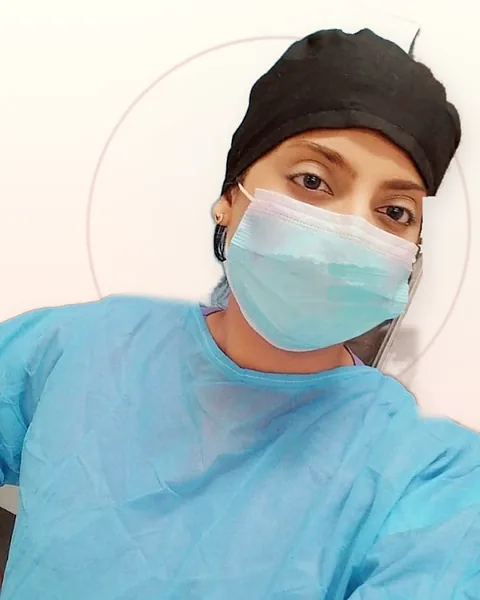
Dr. Ayesha Jawed, MBBS, training in Obstetrics and Gynaecology (CPSP)
PMDC 113388-P. PMDC lists her as Ayesha Javaid. How to check a doctor's registration.
Something else on your mind? WhatsApp +92 334 2382368, Monday to Saturday, 9 am to 9 pm.
It's a pregnancy loss before the 5th week. The test turns positive, then negative a few weeks later, and the period comes about a week late. Cleveland Clinic says it's very common, and most people go on to healthy pregnancies.
The RCOG says there's no evidence that stress or sex during pregnancy causes a miscarriage. UCLH says most early losses come from genetic changes in the egg, sperm or early pregnancy.
Sab se aam alamat 24 hafton se pehle khoon aana hai, halka ya zyada, saath mein pait ke neeche dard ya marorh. Kabhi tissue ya paani nikalta hai. Kabhi koi alamat nahi hoti aur scan mein pata chalta hai.
NHS ke mutabiq periods wapas aane mein 8 hafte tak lag sakte hain. Bleeding 2 hafte tak reh sakti hai. Agar bleeding band hone ke 6 hafte baad bhi period na aaye to doctor se baat karein.
Jab aap jismani aur zehni taur par tayyar hon aur bleeding aur dard khatam ho jaye, tab koshish kar sakti hain. Zyada tar khawateen ka agla hamal kamyab hota hai.
Agar in mein se koi alamat ho to foran qareebi hospital emergency jayen ya Edhi 115 par call karein. Alamat: pad jaldi bhar jana, shadeed pait dard, kandhe mein dard, matli, chakkar, behoshi ya bukhar. Halki bleeding par bhi usi din doctor se mashwara karein.
ServiceAntenatal care in Karachi: the WHO 8-visit schedule, tests and scans, danger signs, and an online consult with a lady doctor between your hospital visits.
 Service
Normal delivery explained: who can try it, the stages of labour, pain relief, tears and when a C-section is needed.
 Service
C section delivery: why it's done, planned or emergency, anaesthesia, risks and Pakistan's rising rates.
Awaiting medical review by Dr. Ayesha Jawed. Written from the sources listed here. General information, not a diagnosis.
Last updated 19 November 2026
Dr. Ayesha JawedMBBS, training in Obstetrics and Gynaecology (CPSP)
Online consult, Rs 499, up to 1 hour. Private, from home, anywhere in Pakistan. Fill in two short steps and WhatsApp opens with your details ready.
Book your consult
Rs 499, up to 1 hour with Dr. Ayesha. Two quick steps.
In an emergency, go to the nearest hospital or call Edhi 115.
This page is coming soon.