 Service
Irregular periods: what counts as irregular, causes at each age, tests and treatment options.

Wondering if your bleeding is too heavy? Here's the yardstick doctors use, the common causes, and what helps.
Book an online consult
Rs 499, up to 1 hour with Dr. Ayesha. Two quick steps.
Quick answer
Your periods are heavy if you change a pad or tampon every 1 to 2 hours, bleed for more than 7 days, pass clots bigger than about 2.5 cm, or need two products at once. Causes such as fibroids can be treated. See a doctor if heavy periods disrupt your life or leave you tired and short of breath.
Heavy bleeding is an emergency if you could be pregnant and it soaks a pad soon after you put it on. Feeling faint or dizzy is another warning sign, says the NHS.
The NHS also lists severe tummy pain and pain in your shoulder with bleeding in pregnancy.
Go to the nearest hospital emergency now, or call Edhi on 115. Don't wait for an online reply.
ACOG says heavy bleeding can come from a pregnancy problem, such as a miscarriage or an ectopic pregnancy. Our guide to bleeding in early pregnancy explains the signs.
Your period is too heavy if you change a pad or tampon every 1 to 2 hours, or bleed for more than 7 days. Clots bigger than about 2.5 cm, or needing two products at once, also count.
That's the National Health Service (NHS) yardstick in the UK. The American College of Obstetricians and Gynecologists (ACOG) uses a slightly different list.
| Sign | NHS (UK) | ACOG (US) |
|---|---|---|
| How often you change | A pad or tampon every 1 to 2 hours | Soaking 1 or more pads every hour for several hours |
| Two products | A pad and a tampon together | More than one pad at a time |
| Length | More than 7 days | More than 7 days |
| Clots | Larger than about 2.5 cm | About the size of a quarter (a US coin) or larger |
| At night | Bleeding through to clothes or bedding | Needing to change pads during the night |
Try this for one cycle. Write down each day of your period, how many pads you used, and any clots or night leaks. That simple count tells a doctor more than "it's very heavy".
The NHS says heavy periods may be normal for you. They can be heavier when periods first start, after pregnancy, or as you get close to menopause.
But "normal for you" doesn't mean you have to put up with it. The NHS says treatment can help if heavy periods affect your daily life. The medical name is menorrhagia, and doctors also call it heavy menstrual bleeding (HMB).
Heavy periods can come from womb or ovary conditions, such as fibroids, PCOS, endometriosis and adenomyosis. Bleeding disorders and some medicines can also cause them, says the NHS. Sometimes no cause is found.
| Cause | What it means | What a doctor may check |
|---|---|---|
| Fibroids and polyps | Growths in the womb. The NHS says fibroids aren't cancer and can cause heavy or painful periods. ACOG lists polyps too. | An ultrasound scan |
| Adenomyosis | The womb lining grows into the muscle wall of the womb. Periods can be heavy and painful. | Ultrasound or MRI, says the NHS |
| PCOS (the NHS now calls it PMOS) and irregular ovulation (see our PCOS page) | If you don't ovulate regularly, ACOG says the womb lining can get too thick. It's common in the teen years, before menopause, and with PCOS or an underactive thyroid. | Your cycle pattern and symptoms |
| Endometriosis | Tissue like the womb lining grows outside the womb. The NHS and ACOG both list it as a cause of heavy periods. | Your history and symptoms |
| Pelvic inflammatory disease (PID) | A pelvic infection. The NHS lists it as a cause. | Infection tests |
| Bleeding disorders | The blood doesn't clot well. Von Willebrand disease is one example. | Clotting tests, if periods were heavy from the start and the family has bleeding problems |
| Medicines and the copper IUD | Blood thinners, aspirin and some cancer medicines. ACOG says the copper intrauterine device (IUD) can make periods heavier, mainly in the first year. | The medicines you take |
| Womb cancer (rare) | The NHS says heavy periods are rarely a sign of it. ACOG says most cases are found after menopause, in the mid 60s. | A scan or a sample of the womb lining |
The NHS says fibroids don't always need treatment if they cause no symptoms. Read more about these womb growths. If you've had a copper T fitted, our guide to the copper T and its side effects covers heavier periods after fitting.
Heavier bleeding in your 40s can be part of the change before menopause. Our page on the signs and symptoms of menopause covers that stage.
Yes, heavy periods can cause iron deficiency anaemia, and the NHS calls them a very common cause. You may feel tired, get short of breath, notice your heartbeat, or look paler than usual.
ACOG says severe anaemia can cause shortness of breath and raise the risk of heart problems.
This matters in Pakistan. The National Nutrition Survey 2018 found about 41.7% of women aged 15 to 49 were anaemic.
The same survey found Sindh had the highest share with iron deficiency anaemia, about 23.8% of women. That's roughly 1 in 4.
Keep iron tablets away from children. The NHS warns an iron overdose can be fatal for a young child.
If you're pregnant and your haemoglobin (Hb, the iron-carrying part of your blood) is low, read our guide to low iron and anaemia in pregnancy.
The first test is usually a full blood count, to check for anaemia. The UK's National Institute for Health and Care Excellence (NICE) advises it for every woman with heavy periods.
Other tests depend on your history. You won't always need all of them.
NICE says routine female hormone tests aren't needed for heavy periods. Thyroid tests are only needed if you have other signs of a thyroid problem.
Dr. Ayesha can't do tests online. She can suggest the ones that fit your history, and then go through your reports with you.
Heavy periods are treated with some types of contraception, medicine to reduce bleeding, or prescription anti-inflammatory painkillers, says the NHS. If these don't work, a hospital team can offer procedures.
The NHS says heavy periods don't always need treatment. The aim is to make daily life easier.
A doctor chooses the medicine and its dose for you, which is why we don't give doses here. Please don't start tablets or herbal mixes on your own.
If medicines don't help, the NHS and NICE list these hospital options:
Dr. Ayesha doesn't do procedures. If one might help, she'll explain your options and where to go.
See a doctor if heavy periods are affecting your life, you've had them for some time, or you have severe period pain, says the NHS. Bleeding between periods or after sex needs a check too.
The NHS also says to see a doctor if heavy periods come with pain when peeing, pooing or having sex.
You don't have to put up with heavy periods. NICE says they can have a major impact on a woman's quality of life.
Not sure if yours count as heavy? Count your pads for one cycle, then message Dr. Ayesha on WhatsApp at +92 334 2382368.
An online consult can go through your bleeding pattern and symptoms, and review your blood tests and scans. Dr. Ayesha can also plan tests, give advice and follow up. It can't do an examination, a procedure or emergency care.
Dr. Ayesha Jawed, MBBS, postgraduate trainee in Obstetrics and Gynaecology (CPSP), gives online consultations by video, call or WhatsApp.
She can't promise a cure or a set result. Read how online consults work for the full steps.
Send a WhatsApp message or call +92 334 2382368, Monday to Saturday, 9 am to 9 pm. Choose video, call or WhatsApp, and pay Rs 499 by JazzCash, Easypaisa or bank transfer.
ACOG says your doctor will want details of several cycles. It'll help to have these ready:
Questions you might ask:
You can also book an online appointment through the form.
NHS ke mutabiq periods heavy hain agar har 1 se 2 ghante mein pad badalna pare ya period 7 din se zyada chale. 2.5 cm se bare clots ya 2 products ek saath lena bhi isi mein aata hai.
Four simple steps from your first message to your plan. It's the same for every topic.
Message on WhatsApp
Send a message to +92 334 2382368, or use the form on this page.
Pick a time
Choose a time from Monday to Saturday, 9 am to 9 pm.
Talk by video, phone or WhatsApp
Talk to Dr. Ayesha for up to 1 hour, in the way that suits you.
Get your plan
Leave with clear next steps, and a prescription when it's safe.
She reviews reports you share.
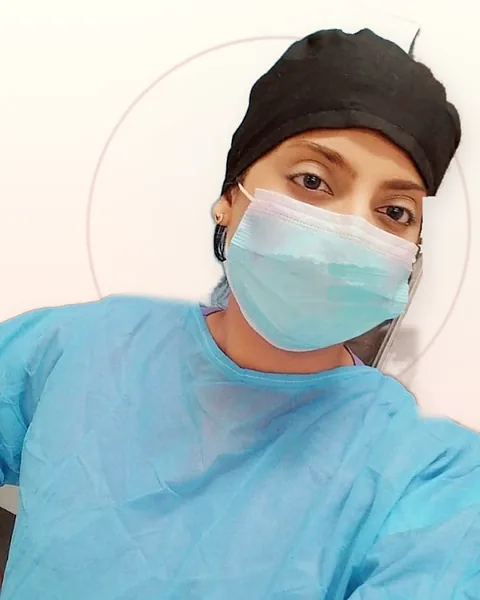
Dr. Ayesha Jawed, MBBS, training in Obstetrics and Gynaecology (CPSP)
PMDC 113388-P. PMDC lists her as Ayesha Javaid. How to check a doctor's registration.
Something else on your mind? WhatsApp +92 334 2382368, Monday to Saturday, 9 am to 9 pm.
There's no daily number in the NHS advice. It says periods are heavy if you change a pad every 1 to 2 hours. ACOG says soaking one or more pads every hour for several hours is heavy. Count your pads for one cycle and show a doctor.
Yes, they can. The NHS lists fibroids as a cause and says they can bring heavy or painful periods. Many fibroids cause no symptoms. An ultrasound scan is usually how they're found.
They can, through iron deficiency anaemia. The NHS lists tiredness and shortness of breath as common symptoms, and hair loss as a less common one. A full blood count shows if you're anaemic.
Not always. NICE says medicine can sometimes be tried without an exam if you have no other symptoms. NICE says an exam comes before tests or before an IUS is fitted. No internal exam is done in an online consult.
NHS ke mutabiq har 1 se 2 ghante mein pad badalna pare ya period 7 din se zyada chale to bleeding zyada hai. 2.5 cm se bare clots bhi isi nishani mein aate hain. Ek cycle ke pads gin kar doctor ko batayen.
Haan. NHS kehta hai heavy periods iron ki kami wali anaemia ki aam wajah hain. Thakan aur saans phoolna iski nishani hai. CBC test karwayen.
NHS ke mutabiq IUS, combined pill, bleeding kam karne wali dawa ya painkillers. Zaroorat ho to hospital mein procedure. Dawa aur dose doctor tay kare, khud se shuru na karein.
ServiceIrregular periods: what counts as irregular, causes at each age, tests and treatment options.
 Service
PCOS treatment in Karachi: how periods, skin, weight and fertility are managed, which medicines doctors may use, and an online consult with Dr. Ayesha.
 Guide
Fibroids are common womb growths that aren't cancer.
Awaiting medical review by Dr. Ayesha Jawed. Written from the sources listed here. General information, not a diagnosis.
Last updated 19 November 2026
Dr. Ayesha JawedMBBS, training in Obstetrics and Gynaecology (CPSP)
Online consult, Rs 499, up to 1 hour. Private, from home, anywhere in Pakistan. Fill in two short steps and WhatsApp opens with your details ready.
Book your consult
Rs 499, up to 1 hour with Dr. Ayesha. Two quick steps.
In an emergency, go to the nearest hospital or call Edhi 115.
This page is coming soon.