 Service
Menopause Treatment in Karachi
Menopause treatment options in plain words: HRT, non-hormonal care, mood, bones and dryness.

Menopause is a natural stage of life, but its symptoms can be hard. Here's what's normal, what the usual age is, and when to get help.
Book an online consult
Rs 499, up to 1 hour with Dr. Ayesha. Two quick steps.
Quick answer
Menopause is when you haven't had a period for 12 months, usually between ages 45 and 55. Common symptoms are changed periods, hot flushes, night sweats, poor sleep, low mood, vaginal dryness and joint aches. Symptoms often last 7 to 9 years, and help is available. Any bleeding after menopause needs a check.
The main symptoms of menopause are changed periods, hot flushes, night sweats, poor sleep, low mood, brain fog, weight gain, vaginal dryness and urine problems. The NHS groups them by body system, and many women have only a few of them.
In Roman Urdu, people often call menopause maahwari band hona or periods band hona. When someone searches menopause ki alamat, they're asking about the same list below.
The NHS lists these too:
Bone loss is also part of menopause, and it can lead to weak bones (osteoporosis). You won't feel it happening, so read our guide on bone health after menopause to learn how to protect your bones.
A hot flush is a sudden feeling of heat or cold in your face, neck and chest. It can bring heavy sweating, a racing heart, anxiety or dizziness, and it can last several minutes.
Hot flushes that come at night are called night sweats. They can wake you up and leave you tired the next day, according to the American College of Obstetricians and Gynecologists (ACOG).
Thak gayi hain, udaas hain ya garmi lagti hai? Dr. Ayesha ko WhatsApp karein: +92 334 2382368. Online consult Rs 499, up to 1 hour.
At menopause, your ovaries stop working in the old way and make much less of the hormone estrogen. The World Health Organization (WHO) says this is what causes menopause, and it marks the end of the years when you can get pregnant naturally.
Estrogen helps control your monthly cycle. ACOG says its level starts to go up and down in your 30s and 40s, and that's why periods change first.
Here's what menopause does and doesn't mean:
The first sign of menopause is usually a change in your periods. The NHS says they may come more or less often, or get heavier or lighter. Hot flushes, poor sleep and mood changes often start around the same time.
ACOG says a cycle may get longer or shorter than usual for you, and you may skip periods. These changes are normal before menopause. ACOG still says to report them, because abnormal bleeding can be a sign of a problem.
What about signs of menopause at 40? Menopause before 45 is called early menopause, and before 40 it's called premature menopause, the NHS says. If your periods change or stop before 45, see a doctor and read our guide on premature menopause.
If you still get periods, even irregular ones, you're most likely in perimenopause, not menopause. Menopause is only confirmed once you've gone 12 months without a period, and WHO says perimenopause ends one year after your final period.
| Stage | What it means | Periods | Can you get pregnant? |
|---|---|---|---|
| Premenopause | Your usual years before any change | Your normal pattern | Yes |
| Perimenopause | The years leading up to menopause, when hormones go up and down | Irregular, heavier or lighter, skipped | Yes, it's still possible |
| Menopause | The point when you've had no period for 12 months | Stopped | No natural pregnancy after this point |
| Postmenopause | All the years after menopause | None. Any bleeding needs a check | No |
Some signs can come from other things. A missed period in your 40s can still be pregnancy, because the NHS says pregnancy is possible in perimenopause. Hormonal contraception can also hide the signs, since it changes your bleeding. A doctor can help you sort this out, so don't diagnose yourself from a list online.
Yes. WHO says an operation that removes both ovaries can bring on menopause, and the NHS adds that radiotherapy or chemotherapy can cause it too. If you've had such treatment and new symptoms start, tell your doctor.
Heavy or long bleeding while your periods haven't stopped is a sign to report. The NHS advises seeing a doctor if your bleeding has changed and you're bleeding more than before.
Most women aged 45 or over don't need a blood test. UK guidance from NICE (the National Institute for Health and Care Excellence) says your age, symptoms and periods are usually enough.
NICE also says some tests shouldn't be used to identify menopause at 45 or over. These include anti-Mullerian hormone (AMH), inhibin, estradiol, and counting egg follicles or measuring the ovaries on a scan.
A follicle-stimulating hormone (FSH) blood test is kept for women aged 40 to 45 with symptoms and changed periods, or for women under 40. That's why home test kits or one-off lab reports shouldn't be read on their own. Ask a doctor to look at them with your symptoms.
Menopause usually starts between ages 45 and 55, according to WHO. A Karachi study of 287 menopausal women found an average of 47.1. ACOG gives 51 for women in the United States.
Each number belongs to a different group of women. The Karachi figure comes from a population survey published in 2006 by Baig and Karim, so it doesn't describe every woman in Pakistan.
That same study found that only 58% of the 925 women asked knew the correct meaning of menopause. The biggest source was relatives (35%), and only 14% learned from health workers. For every Pakistani figure we've found, see our full guide on menopause age.
Yes, menopause can affect mood. The NHS lists mood swings, low mood, depression and brain fog as symptoms, and WHO lists depression and anxiety. A 2024 review of 50 studies found depression in about 28 of every 100 postmenopausal women.
That review, by Li and colleagues, covered 385,092 women. It also found that women with more menopause symptoms, a past mental illness or a long-term disease were more likely to be depressed.
Low mood isn't a weakness. The NHS says poor sleep and tiredness can make mood and memory problems worse.
Dr. Ayesha Jawed's own study looks at depression after menopause. The College of Physicians and Surgeons Pakistan (CPSP) approved her plan in 2025. You can read about it on the dr ayesha jawed research page, and no results are out yet.
For signs, causes and help, read our guide on depression in post-menopausal women. If you ever have thoughts of harming yourself, go to the nearest hospital emergency now, or call Edhi on 115.
WHO says menopause is often not discussed within families. In a small 2021 Karachi study by Asad and colleagues, women spoke of little support from their husbands. Most said husbands needed to learn about menopause changes.
If you're her son, daughter or husband, you can help. Listen, don't brush her feelings aside, and help her book a consult.
Dil ghabrata hai ya udaasi rehti hai? Dr. Ayesha ko WhatsApp karein: +92 334 2382368. Online consult Rs 499.
Menopause symptoms usually last 7 to 9 years, and sometimes longer, the NHS says. They can change over time, so hot flushes may ease while low mood or anxiety starts later.
Some symptoms, like joint pain and vaginal dryness, can carry on after menopause. The NHS also says your ethnic background can affect which symptoms you get, how strong they are and how long they last.
It's different for each woman, and you don't have to wait for symptoms to end before you get help.
Talking to a doctor is the first step, because there are both lifestyle changes and medical treatments that can help. The NHS says early advice can reduce the effect of menopause on your health, your relationships and your work.
The NHS suggests these simple steps:
Medical options, such as hormone replacement therapy (HRT) and treatments without hormones, need a doctor's advice. The choices are covered on our menopause treatment page. We don't name medicines or doses here, because the right choice depends on your own health.
See a doctor if your symptoms affect your daily life, if you have palpitations, or if your periods are getting heavier. Any bleeding after 12 months with no period always needs checking, even if it's only spotting or happens once.
The NHS says it's usually not serious. But it can be a sign of cancer, which is easier to treat when found early. Read our guide on postmenopausal bleeding to learn what checks to expect.
Also get advice about contraception. The NHS says you need it for 1 year after your last period at 50 or over. At 40 to 49, it's 2 years. If you notice unusual or smelly discharge, read our guide on white discharge and mention it in your consult.
An online consult lets you talk through your menopause symptoms and plan the next steps. Dr. Ayesha can give advice, plan the tests you may need and follow up with you.
She reviews your reports, and you can share clear photos of them on WhatsApp. She can send a prescription when it's safe to do so online.
It can't do a physical exam, a scan or a blood test, and it isn't for emergencies. If you need one, she'll tell you, and you'll go to a hospital or lab in person.
Dr. Ayesha Jawed, MBBS, postgraduate trainee in Obstetrics and Gynaecology (CPSP), gives online consultations for Karachi Gynae.
You can choose video, a call or WhatsApp on +92 334 2382368, Monday to Saturday, 9 am to 9 pm. You can pay by JazzCash, Easypaisa or bank transfer. Fees are on our consult fees page. See how an online consultation works, or book an online consult. We can't promise a cure, but you won't have to work it out alone.
Four simple steps from your first message to your plan. It's the same for every topic.
Message on WhatsApp
Send a message to +92 334 2382368, or use the form on this page.
Pick a time
Choose a time from Monday to Saturday, 9 am to 9 pm.
Talk by video, phone or WhatsApp
Talk to Dr. Ayesha for up to 1 hour, in the way that suits you.
Get your plan
Leave with clear next steps, and a prescription when it's safe.
She reviews reports you share.
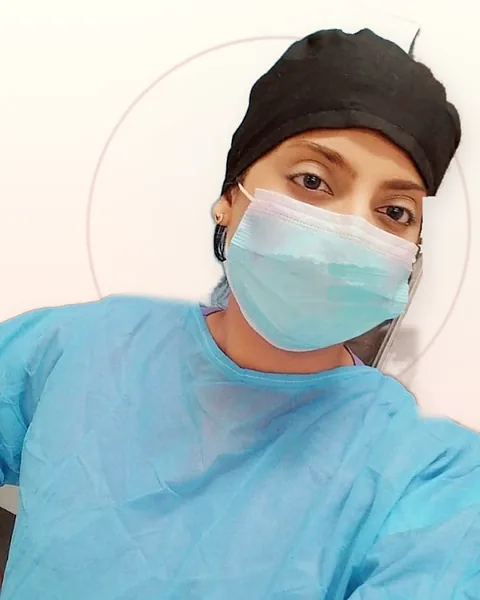
Dr. Ayesha Jawed, MBBS, training in Obstetrics and Gynaecology (CPSP)
PMDC 113388-P. PMDC lists her as Ayesha Javaid. How to check a doctor's registration.
Something else on your mind? WhatsApp +92 334 2382368, Monday to Saturday, 9 am to 9 pm.
Menopause means you haven't had a period for 12 months in a row. It happens because your ovaries make much less estrogen, and it ends the years when you can get pregnant naturally. In Roman Urdu it's often called maahwari band hona.
The first sign is usually a change in your periods. They may come more or less often, or get heavier or lighter. Hot flushes, night sweats, poor sleep and mood changes often start around the same time, the NHS says.
Yes. The NHS and WHO both list low mood, depression and anxiety as menopause symptoms. A 2024 review of 50 studies found depression in about 28 of every 100 postmenopausal women. Please talk to a doctor.
Symptoms usually last 7 to 9 years, and sometimes longer, according to the NHS. They can change over time. Joint pain and vaginal dryness can carry on after menopause, so it's worth getting help now.
Yes. Pregnancy is still possible until menopause is confirmed. The NHS says to use contraception for 1 year after your last period at 50 or over, and 2 years at 40 to 49.
Usually not if you're 45 or over. NICE says doctors can identify menopause from your age, symptoms and 12 months without a period. A blood test is kept for women aged 40 to 45 or under 40.
Periods ka badalna, hot flushes (achanak garmi lagna), raat ko paseena, neend na aana, udaasi, bhoolna, wazan barhna, vagina mein khushki aur peshab ke masle. Har aurat ko sab alamat nahi hoti.
WHO ke mutabiq aam taur par 45 se 55 saal. Karachi ki ek study (2006) mein average umar 47.1 saal thi. 45 se pehle periods band hon to doctor ko zaroor dikhayein.
NHS ke mutabiq menopause mein mood swings, udaasi, anxiety aur dil ki dharkan tez hona ho sakta hai. Neend ki kami ise aur barha deti hai. Dil ki dharkan ka masla ho to doctor ko zaroor batayein.
NHS ke mutabiq alamat aam taur par 7 se 9 saal rehti hain, kabhi is se zyada. Waqt ke sath alamat badal sakti hain, is liye intezar na karein aur madad lein.
ServiceMenopause Treatment in Karachi
Menopause treatment options in plain words: HRT, non-hormonal care, mood, bones and dryness.
 Guide
Bleeding in early pregnancy is common but can be serious.
 Service
C section delivery: why it's done, planned or emergency, anaesthesia, risks and Pakistan's rising rates.
 Menopause
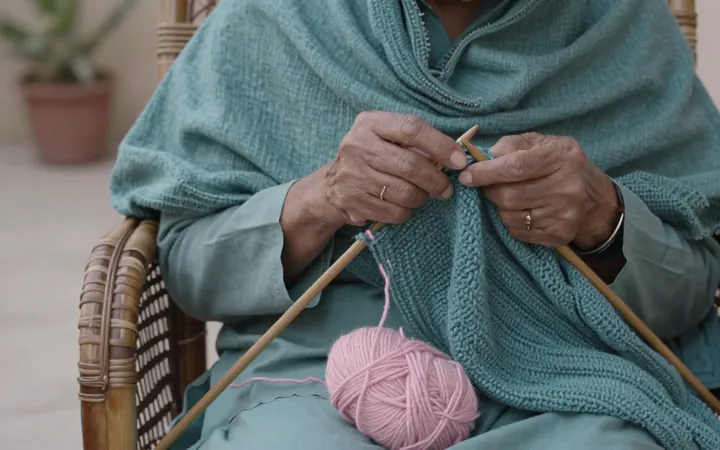
 usually comes between 45 and 55. Here's what Pakistani studies say about the average age, what can change it and when to see a doctor.
 Menopause
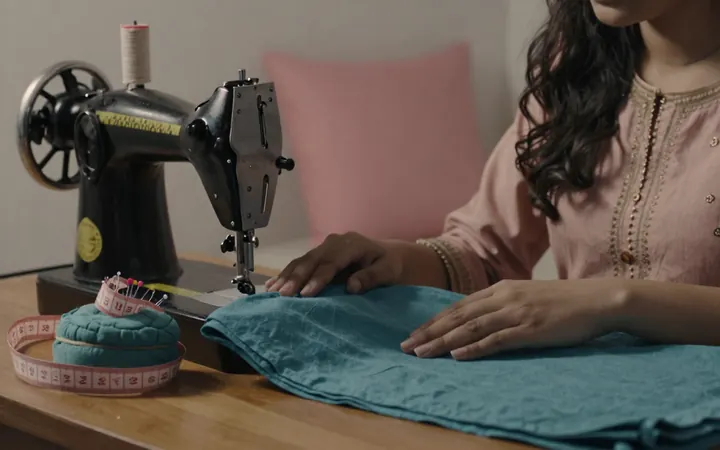
 before 40 is rare but real. Here are the causes, the blood tests doctors use, and why starting care early protects your bones and heart.
Awaiting medical review by Dr. Ayesha Jawed. Written from the sources listed here. General information, not a diagnosis.
Last updated 19 November 2026
Dr. Ayesha JawedMBBS, training in Obstetrics and Gynaecology (CPSP)
Online consult, Rs 499, up to 1 hour. Private, from home, anywhere in Pakistan. Fill in two short steps and WhatsApp opens with your details ready.
Book your consult
Rs 499, up to 1 hour with Dr. Ayesha. Two quick steps.
In an emergency, go to the nearest hospital or call Edhi 115.
This page is coming soon.